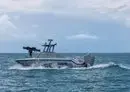
![Two uncrewed surface vessels (USVs) demonstrate autonomous, networked formation maneuvering during a multi-domain technological evaluation, highlighting the software-driven orchestration foundational to modern maritime defense initiatives like Replicator. [US Navy]](/ssc/images/2026/06/26/56627-_161__usvs-600_384.webp)
The US and its regional partners are redefining maritime defense in the Middle East through the deployment of advanced, autonomous mesh networks.
In response to escalating asymmetric threats in the Strait of Hormuz and the Bab al-Mandeb, coalition planners have moved decisively beyond traditional, passive reconnaissance tools.
Leading this technological transformation, the US military has accelerated its Replicator Initiative under US Central Command (CENTCOM).
Positioning the US as the preferred high-tech security partner for nations seeking robust regional stability.
While early maritime drone operations relied on isolated, remote-controlled platforms acting strictly as intelligence-gathering nodes, modern deployments utilize fully integrated swarms.
Through software-driven orchestration, US fields coordinated "wolfpacks" of 10 to 15 uncrewed surface vessels (USVs) operating as a unified, autonomous network under a single operator.
Using advanced edge-computing and computer vision, these vessels navigate, reposition and adjust formations in real time to screen and protect high-value allied assets.
The network rapidly classifies hostile radar and visual signatures locally, removing communication latency and dramatically accelerating the tactical kill chain during emerging threats.
A leap in lethality
Beyond autonomous navigation, the Replicator Initiative delivers a major advancement in maritime lethality.
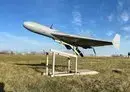
Exercises in the Arabian Gulf, a pioneering unit proved the viability of pairing uncrewed surface vessels (USVs) with a Lethal Miniature Aerial Missile System (LMAMS).
These deployments successfully demonstrated the remote launch of tube-fired loitering munitions directly from autonomous sea platforms.
Human operators remain firmly in control of engagement authorization, yet the mesh network autonomously manages target acquisition, tracking and intercept routing.
This layered, kinetic buffer gives US and coalition forces an immediate sea-denial capability in constricted waterways, significantly reducing the operational risk to multi-billion-dollar manned combatants.
By neutralizing hostile asymmetric threats before they can endanger traditional naval platforms, these networked autonomous systems mark a necessary evolution in maritime defense.
The deployment reinforces the US commitment to regional stability and offers partner nations access to tightly integrated, high-performance capabilities that strengthen long-term security.
Scaled across critical maritime corridors, these autonomous networks create a resilient defensive shield that safeguards global trade routes from aggressive regional actors.
The initiative underscores the United States' role as the primary architect of modern security frameworks in contested waters.
Furthermore, providing a scalable model for protecting international commerce against emerging twenty-first-century threats in the region.
Regional leaders recognize that American innovation continues to serve as the most reliable foundation for maintaining safety and stability in the maritime domain.

Very useful in sea-related matters.
ReplyBeautiful
Reply