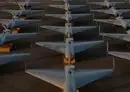
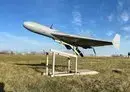
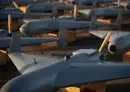
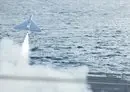
![Drawing on decades of expertise, US Army Yuma Proving Ground hosted the evaluation of the Marine Corps' LUCAS system on September 19, 2025. [US Army/by Mark Schauer]](/ssc/images/2025/12/23/53155-lucas_drones_2-600_384.webp)
In July 2025, US Secretary of War Pete Hegseth announced plans to expand and enhance the US drone warfare program with a more capable fleet.
The initiative reflects lessons from conflicts like the Russia-Ukraine war, highlighting the importance of low-cost, expendable unmanned systems for achieving and sustaining aerial superiority.
The growing need to counter emerging threats from adversaries such as China and Iran has further accelerated these efforts.
Both countries have invested heavily in their own drone programs, prompting US defense planners to prioritize scalable systems that can be produced and deployed in large numbers.
Within this strategic context, the Department of War has emphasized affordability, rapid production, and operational flexibility as central requirements for future unmanned platforms.
One system well positioned to meet these needs is the LUCAS or "Low-Cost Uncrewed Combat Attack System."
LUCAS is a new combat drone designed to deliver an affordable, scalable solution for modern military operations.
AI integration
The LUCAS system represents a significant advancement in drone technology through extensive research and innovative engineering.
It leverages a foundational design that has been extensively modified to adhere to stringent US military specifications.
The result is a low-cost precision attack drone that builds on a proven airframe while incorporating more advanced capabilities.
Key enhancements include autonomous functionality, integration with artificial intelligence systems, extended loiter times, and mesh-network swarming.
In swarming operations, multiple drones can share data directly with one another rather than relying on a single centralized control node, increasing resilience and effectiveness.
Although many details remain classified, one LUCAS variant, known as the Arrowhead, can reportedly carry a 45kg payload over a distance of approximately 2,780km.
This capability is comparable to modified Russian Shahed variants used in strikes during the war in Ukraine.
Initial LUCAS drone deployments have already been made to a US Central Command task force feature smaller variants with a reduced operational range of approximately 640 km.
Flexible launch options
The LUCAS system incorporates two distinct launch methods: truck-based deployment and rocket booster-assisted launch.
Truck-based launches offer significant operational advantages, including rapid repositioning, reduced vulnerability to counterstrikes, and the ability to support diverse mission profiles.
The rocket booster-assisted option provides additional thrust, allowing drones to reach operational speed quickly after launch.
Together, these launch methods enable flexibility and speed without requiring highly specialized personnel, making it possible to deploy large numbers of drones simultaneously.
"This new task force sets the conditions for using innovation as a deterrent," CENTCOM commander Adm. Brad Cooper said.
"Equipping our skilled warfighters faster with cutting-edge drone capabilities showcases US military innovation and strength, which deters bad actors,” he added.
While the Department of War has not shared production figures, but LUCAS uses off-the-shelf components for scalable, cost-effective manufacturing, supporting US military strategy.