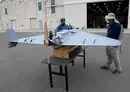
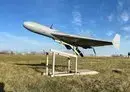
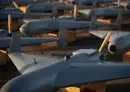
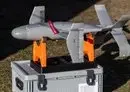
![Low-Cost Unmanned Combat Attack System (LUCAS) drones are positioned on the tarmac at a base in the US Central Command (CENTCOM) area of operations, November 23, 2025. [US Department of War]](/ssc/images/2025/12/12/53085-251123-d-d0477-1163-600_384.webp)
United States Central Command (CENTCOM) on December 3 announced the creation of Task Force Scorpion Strike (TFSS), the military’s first one-way attack drone squadron based in the Middle East.
The new unit focuses on delivering cost-effective, efficient drone systems to warfighters and has already deployed a squadron of Low-Cost Unmanned Combat Attack System (LUCAS) drones.
These autonomous systems offer extensive range and can be launched in multiple ways, including catapults, rocket-assisted takeoff and mobile platforms.
"Equipping our skilled warfighters with cutting-edge drone capabilities more quickly showcases U.S. military innovation and strength, which deters bad actors," CENTCOM said in a statement quoting Adm. Cooper.
LUCAS drones are designed to circle targets before striking, providing precision at low cost and high impact.
Their relevance is underscored by global conflict trends, particularly Iran’s widespread use of Shahed-136 drones.
In response, the US developed LUCAS, an innovative system unveiled on July 16, 2025, to challenge Iran’s drone capabilities and address the escalating threat of low-cost aerial warfare.
Countering Iran
Loitering munitions -- widely known as "kamikaze drones" -- are reshaping modern conflict.
Iran’s Shahed-136 drones have become notorious for their affordability and have been used extensively in the Middle East and supplied to Russian forces in Ukraine.
Built with simple components, they can evade certain defenses through swarming tactics and their single-use design.
While effective, critics note the system’s limited adaptability and weak resistance to electronic warfare.
The growing prevalence of the Shahed-136 has compelled the US to develop solutions to safeguard allies and counter this widely deployed threat.
LUCAS directly addresses this challenge, expanding US counter-drone capacity while maintaining low production costs.
This also represents a shift in counter-drone warfare.
While mirroring the affordability of Iran’s drones, it offers greater adaptability, autonomous features and precision targeting.
Unlike the Shahed-136’s pre-programed flight paths, LUCAS uses advanced artificial intelligence for real-time decision-making and improved evasion against electronic interference.
Its modular design allows rapid reconfiguration for missions ranging from surveillance to targeted strikes.
Though both systems emphasize cost-effectiveness, LUCAS benefits from more advanced materials and sensor technology, enhancing durability and accuracy.
LUCAS’s development reflects the US effort to adapt to evolving warfare trends.
By addressing Iran’s expanding use of kamikaze drones, the US reinforces its commitment to defense innovation.
With its affordability and adaptability, LUCAS aims to strengthen the protection of US and allied forces, redefining counter-drone strategy in the years ahead.