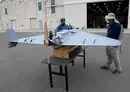
![In an unprecedented demonstration of rapid innovation, the Indiana National Guard hosted the T-REX experimentation framework that was instrumental in advancing the LUCAS, from a public demonstration to operational employment in seven months. [Indiana National Guard]](/ssc/images/2026/05/15/56054-_130__lucas-600_384.webp)
America's autonomous warfare strategy reached a turning point after LUCAS completed its first documented combat deployment during Operation Epic Fury.
The Low-Cost Uncrewed Combat Attack System (LUCAS) represents Washington's latest response against increasingly dangerous drone saturation tactics worldwide during modern conflicts.
Military officials deployed LUCAS on February 28, 2026, targeting hostile positions while evaluating autonomous strike coordination capabilities during operations abroad.
Defense planners designed LUCAS as an affordable, mass-producible attack drone capable of overwhelming sophisticated enemy air defense networks during combat.
The platform directly counters Iranian Shahed-136 drones, which demonstrated devastating effectiveness against traditional defenses during recent regional conflicts across Ukraine and the Middle East.
Pentagon leaders increasingly view inexpensive autonomous aircraft as essential tools for maintaining battlefield advantages against heavily armed adversaries.
Replicator targets the drone mass gap
The Department of War's broader Replicator initiative seeks to rapidly produce thousands of autonomous systems capable of operating across multiple military domains simultaneously.
Defense officials created Replicator after observing adversaries deploy enormous drone swarms in which they tried to strain American and allied defenses during conflicts.
Instead of relying exclusively on costly missiles, planners now emphasize scalable systems that support rapid battlefield replenishment during sustained operations overseas.
LUCAS supports that strategy because manufacturers can produce larger quantities quickly without relying upon exceptionally specialized industrial infrastructure during emergencies.
Artificial Intelligence (AI) expands autonomous coordination
A major breakthrough came in March 2026, when when AI software successfully coordinated intelligent, collaborative drone formations during testing for operators.
The software allows multiple LUCAS drones to share information instantly while executing coordinated attacks with limited direct human supervision during combat.
Military analysts believe autonomous coordination could significantly increase combat effectiveness while reducing the operational burdens on deployed service members worldwide.
Maritime flexibility strengthens US reach
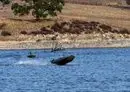
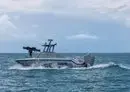
The US Navy also demonstrated successful shipborne LUCAS launches, dramatically expanding deployment flexibility across contested maritime operating environments worldwide.
Naval commanders can rapidly position autonomous strike drones aboard vessels operating near dangerous coastal regions and strategic waterways during crises.
American defense companies increasingly collaborate with military planners, accelerating development cycles that have been slowed nationwide by complicated acquisition procedures for decades.
Officials argue that partnerships with innovative technology firms strengthen national security and reinforce America's leadership in advanced military capabilities worldwide.
As drone warfare evolves rapidly, LUCAS and Replicator together illustrate America's determination to maintain technological superiority through scalable autonomous systems worldwide.