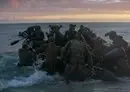
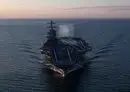
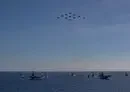
![US Carrier Strike Group sails in formation with destroyers and aircraft, projecting sustained maritime dominance and reinforcing Washington's ability to maintain unbroken pressure at sea. [US Navy/AFP]](/ssc/images/2026/06/11/56424-_148__carrier_strike_group_formation-600_384.webp)
The United States has tightened its maritime cordon around key Iranian ports, creating a maritime interdiction operation intended to sustain diplomatic pressure.
Defense officials describe the operation as a long-term demonstration of naval dominance designed to limit Iran's economic options.
Layered network ensures persistent maritime oversight.
The maritime interdiction operation operates through a multilayered architecture that integrates Carrier Strike Groups (CSGs), guided-missile destroyers, and advanced aerial surveillance platforms.
Each element contributes continuous coverage across vital waterways, ensuring no vessel can transit the restricted zone without detection.
High-altitude drones and uncrewed surface vessels provide uninterrupted tracking data to nearby warships, enabling rapid interdiction of unauthorized movement.
This synchronized system has sharply reduced port throughput, constraining both commercial and illicit maritime activity across the region.
Logistics enable indefinite operational endurance.
Officials emphasize that the maritime cordon's strength rests not only on tactical precision but also on the Navy's unmatched logistical depth.
Robust underway replenishment capabilities allow ships to remain on station for extended periods without degrading readiness or operational tempo.
Military planners assess that Iran's economic resilience under these conditions is limited, with analysts warning of significant strain if maritime access remains blocked.
The administration is leveraging this imbalance to intensify diplomatic pressure, signaling that the cordon will remain in place until a comprehensive agreement is reached.
The strategic message is deliberate and direct: the United States intends to maintain full maritime control until negotiations conclude.
By sustaining perimeter, US transformed naval superiority into a decisive instrument shaping the diplomatic landscape, limiting the adversary's ability to wait out the maritime cordon.