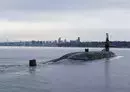
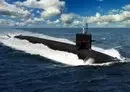
![The Ohio-class ballistic-missile submarine USS Maine (SSBN 741) begins a dive into the Strait of Juan de Fuca off the Washington Coast, March 18, 2025, during routine operations. [US Coast Guard]](/ssc/images/2026/02/27/54750-_74f__ohio-class_sub_ssbn-600_384.webp)
The Ohio-class submarine represents one of the United States Navy's most advanced and formidable assets for nuclear deterrence.
Designed as part of the nuclear triad, these submarines specialize in ensuring the survivability and striking capability necessary to prevent nuclear conflict.
The class includes 14 ballistic missile submarines (SSBNs) and four converted guided missile submarines (SSGNs), securing the nation's strategic interests across global waters.
Advanced capabilities and strategic mission
The primary mission of Ohio-class SSBNs is to serve as a critical component of America's nuclear deterrence strategy.
They contribute to the triad by ensuring mobility, stealth and second-strike capability in the event of a nuclear attack.
Their ability to patrol undisclosed and vast ocean areas guarantees survivability while maintaining strategic ambiguity.
Powered by S8G nuclear reactors, the submarines have virtually unlimited range, restricted only by crew endurance and provisions.
Each Ohio-class SSBN can carry up to 24 Trident II D5 ballistic missiles equipped with multiple independently targetable reentry vehicles.
Trident II missiles are highly accurate, have a range exceeding 7,500 miles, and ensure the submarines can strike targets anywhere globally.
The submarines feature Mark 48 heavyweight torpedoes in four 21-inch bow tubes, capable of engaging enemy ships or submarines at ranges up to 24 miles.
Design and operational excellence
The submarines are designed with impressive dimensions: approximately 170 meters long, a beam of 13 meters wide and a displacement of 18,750 tons when submerged.
Despite their size, these submarines are engineered to operate with exceptional stealth, utilizing sound-damping technologies and advanced sonar systems making them incredibly difficult to detect.
As such, they are considered one of the quietest submarine classes deployed by any navy.
Each submarine is crewed by approximately 155 personnel, including officers and enlisted sailors.
The crew operates on a dual-team structure, Blue and Gold teams, that alternate patrols to maximize operational readiness.
Crew rotation occurs every 75 to 90 days, ensuring the submarines remain at sea conducting deterrent patrols for months without compromising efficiency.
Legacy and future replacement
The first Ohio-class submarine was commissioned in 1981, with the fleet serving as the backbone of US strategic deterrence over decades.
In addition to SSBN variants, four submarines were converted to SSGNs, delivering additional capabilities such as Tomahawk missile strikes and support for special forces operations.
These submarines are set to be replaced by the Columbia-class starting in the early 2030s, ensuring continued strategic deterrence into the next century.
Ohio-class submarines remain vital to US national security, offering unparalleled survivability and deterrent strength.
Their ability to remain hidden while delivering devastating retaliatory strikes ensures adversaries are deterred from initiating nuclear conflict.