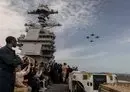
![Carrier Air Wing 8 fly over USS Gerald R. Ford during the wing’s aerial change‑of‑command ceremony in the Caribbean Sea, January 19, 2026. [US Navy]](/ssc/images/2026/02/26/54724-_76b__carrier_air_wing_8-600_384.webp)
Carrier Air Wing 8 (CVW-8), known as "The Immortals," is one of the Navy's long-standing carrier aviation formations.
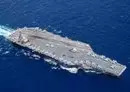
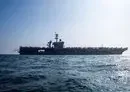
The air wing is currently embarked aboard the USS Gerald R. Ford, the lead ship of the Navy's newest carrier class.
Carrier Air Wing 8 traces its lineage to World War II and has deployed worldwide.
Today, the air wing comprises roughly 70 aircraft organized into multiple squadrons spanning strike, electronic attack, airborne command and rotary-wing missions.
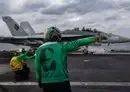
Its current composition includes F/A-18E/F Super Hornets, EA-18G Growlers, E-2D Advanced Hawkeyes and MH-60 helicopters.
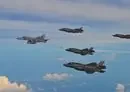
Recent deployments have also integrated the F-35C Lightning II, the Navy's carrier-based fifth-generation stealth fighter.
The F-35C brings advanced sensors, stealth shaping and data-sharing capabilities to the carrier air wing.
Its integration alongside Super Hornets creates a mixed-generation force designed to combine survivability and firepower.
Integrated airpower at sea
Carrier Air Wing 8 is structured to conduct a wide spectrum of combat operations from the sea.
Strike fighters provide precision attack options using a range of air-to-surface and air-to-air munitions.
The EA-18G Growler aircraft delivers airborne electronic attack, jamming adversary radar and communications systems.
E-2D Advanced Hawkeye aircraft provide airborne early warning, command and control for the strike group.
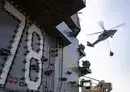
MH-60R Seahawk helicopters conduct anti-submarine warfare using dipping sonar and lightweight torpedoes. MH-60S Seahawks support logistics, search and rescue and maritime security missions.
The integration of F-35C aircraft enhances the air wing's ability to detect and track threats.
Its sensor fusion allows pilots to compile data into a single, coherent tactical picture, shareable across the strike group through secure data links.
The result is improved situational awareness for commanders operating in the most complex environments worldwide.
Operations with the Ford Carrier Strike Group
Embarked aboard the Ford, the air wing operates with advanced launch and recovery systems.
The carrier's Electromagnetic Aircraft Launch System replaces traditional steam catapults with digitally controlled launches.
That system provides smoother acceleration profiles tailored to different aircraft weights and launch requirements across diverse mission sets.
Navy officials say the design improves operational efficiency while enabling sustained, high-tempo flight operations during extended deployments.
Carrier Air Wing 8 routinely trains for high-tempo missions during deployment cycles. Sortie rates vary depending on mission requirements, maintenance demands and operational conditions.
The air wing has earned multiple Battle Efficiency Awards, known as the Battle "E," during its history.
The award recognizes sustained superior performance across mission areas during a training and deployment cycle.
As the Navy modernizes its carrier fleet, Carrier Air Wing 8 remains central to sea-based airpower.
Its evolving mix of fifth- and fourth-generation aircraft reflects broader changes shaping the future of naval aviation.
Like
ReplyBeautiful!
Reply