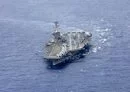
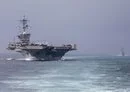
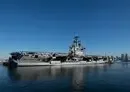
![The USS Abraham Lincoln (CVN 72) sails in the Arabian Sea, on February 11, 2026. [US Navy]](/ssc/images/2026/02/27/54731-_uss_abraham_lincoln-600_384.webp)
Deployments of USS Abraham Lincoln and USS Gerald R. Ford to the Arabian Sea reflects a historic concentration of immense naval firepower and operational capabilities.
This convergence of two Carrier Strike Groups showcases unparalleled strength and determination to uphold regional stability during critical times.
Amid rising tensions with Iran, both carriers project formidable resolve and readiness in the Middle East.
Together, they bring an exceptional and unmatched concentration of advanced naval aviation assets to the area.
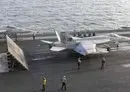
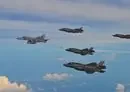
Together, these two carriers embark over 150 aircraft, including F/A-18E/F Super Hornets, EA-18G Growlers, for electronic warfare.
They also embark E-2D Advanced Hawkeyes for airborne command and control, and significantly the fifth-generation F-35C Lightning II.
This massive combined air wing can generate an estimated 250 to 300-plus combat sorties per day during sustained operations.
Commanders gain unmatched capability for strike, reconnaissance and air superiority missions across the entire region.
Massive Tomahawk strike capacity
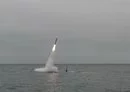
The surface combatants escorting both carrier strike groups—typically a force of 10 to 14 cruisers and destroyers—bring a formidable arsenal of Tomahawk land-attack cruise missiles.
The latest Block V variant features improved navigation, enhanced targeting and the maritime strike Tomahawk capability, which allows for engaging moving ships at sea.
Collectively, these vessels and any attached submarines hold an estimated 300 to 400-plus Tomahawk Block V missiles ready for launch.
This massive strike capacity enables precision attacks against land-based targets or hostile naval forces with minimal warning, adding a layer of devastating offensive capability.
Undersea dominance
Complementing the surface fleet is a robust undersea presence, with an estimated two to four fast-attack submarines, likely Virginia- or Los Angeles-class, operating alongside carriers.
These submarines provide anti-submarine warfare, covert surveillance and intelligence gathering, along with additional Tomahawk strike capacity.
Stealth and endurance allow them to operate ahead of the surface fleet, neutralizing threats and enabling precision strikes deep into contested areas, ensuring undersea dominance.
The combined strike groups also possess comprehensive capabilities to counter threats across all warfare domains.
Aegis-equipped cruisers and destroyers provide layered air and missile defense using SM-2, SM-3 and SM-6 missiles.
Surface threats are handled by Harpoon anti-ship missiles, naval gunfire and carrier-based aviation.
F-35C and Tomahawk integration
The most significant capability enhancement is the integration of the F-35C Lightning II with Tomahawk Block V missiles for a new era of precision strike.
The F-35C's advanced sensors allow it to act as a forward targeting node, detecting mobile targets, such as hostile warships or land-based missile launchers.
It then transmits real-time targeting data to Tomahawk-equipped ships and submarines, enabling precision strikes.
The potent combination transforms the strike group into a proactive hunter, capable of destroying time-sensitive targets before they threaten US forces or allies.