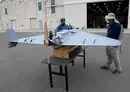
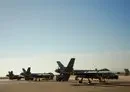
![LUCAS drones are positioned on the tarmac at a base in the US Central Command (CENTCOM) operating area, on November 23. [US Central Command]](/ssc/images/2025/12/21/53131-lucas_drones-600_384.webp)
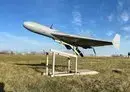
The Low-Cost Unmanned Combat Attack System, or LUCAS, was developed in the United States as an affordable, scalable unmanned platform for modern military operations.
LUCAS bridges the gap between tactical drones and high-value unmanned aircraft, offering scalable, multi-mission deployment and mass production capabilities.
The program reflects a shift toward unmanned platforms that can be risked in high-threat environments without endangering crew or imposing major budget burdens.
LUCAS operates beyond the 640-kilometer range of tactical systems, offering extended reach at lower costs than larger unmanned aircraft.
The system supports a wide array of missions, including carrying strike payloads, supporting communications relay tasks, and conducting intelligence, surveillance, and reconnaissance missions.
In typical operations, LUCAS can loiter for six to eight hours, providing extended surveillance capability in areas where persistent monitoring is required.
Performance and autonomous capabilities
LUCAS cruises at approximately 74 knots and can reach a maximum speed of about 105 knots.
These characteristics make the drone suitable for contested environments where manned aircraft would face elevated risk.
Like many US-developed unmanned systems, LUCAS is believed to include autonomous return-to-base functions designed to protect the platform when communications are disrupted.
These functions enable missions with low observability and minimal data transmission, allowing autonomous operation under degraded conditions.
The drone’s endurance and autonomous features position it as a flexible asset for reconnaissance and strike support, particularly in scenarios requiring persistence without continuous operator input.
These attributes underscore its role as a system that prioritizes survivability and mission continuity in complex operational settings.
Building on these capabilities, LUCAS integrates artificial intelligence to further enhance its operational flexibility and efficiency.
AI integration and future applications
The LUCAS system’s central feature is its integration of artificial intelligence, enabling advanced operational capabilities.
AI-driven target recognition and thermal imaging improve situational awareness while enhancing autonomy during complex missions.
Precision is further improved through compatibility with modular munitions such as the Mjolnir Modular Munition, a lightweight drone-compatible weapon weighing between 2.3 and 2.5 kilograms.
The Mjolnir system includes an internal guidance stabilizer, a programmable electronic fuze, and a swappable warhead, enabling precise target engagement within automated strike cycles.
This modular approach supports flexible mission planning and rapid adaptation to different operational requirements.
While initially envisioned for US Army and US Marine Corps land forces, testing and evaluation reportedly involve US Special Operations Forces and potential maritime applications.
Early simulations suggest broader operational potential, including large-scale swarm deployments.
Some projections indicate that a fleet of 1,000 LUCAS drones could degrade early warning and air defense systems, creating conditions for follow-on strikes by conventional platforms.

Excellent!
Reply