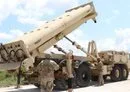
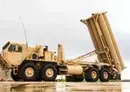
![A Terminal High Altitude Area Defense (THAAD) mobile launcher truck stands deployed with its missile canister pod elevated into an operational firing position. [US Army]](/ssc/images/2026/07/21/56846-_169b__thaad-600_384.webp)
The Terminal High Altitude Area Defense (THAAD) system established a new benchmark for upper-tier missile defense during Operation Epic Fury.
The system demonstrated its unique capacity to defeat advanced long-range ballistic threats at unmatched altitudes and operational ranges.
Superior performance in hostile skies
Iranian forces employed extended-range variants of Khorramshahr and Emad missiles in hopes of overwhelming joint US defensive networks.
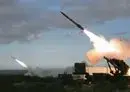
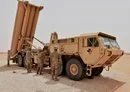
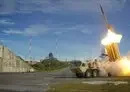
Deployed across the Gulf region, interceptor batteries engaged these inbound threats during midcourse and late midcourse phases of flight.
This early intercept capability successfully collapsed the enemy salvo strategy before it could saturate lower-tier defenses.
The system's advanced AN/TPY-2 radar provided persistent tracking data that was shared across the integrated network.
This connectivity multiplied the effectiveness of every other defensive asset operating within the theater.
The operational record reinforced this platform as the cornerstone of US area defense against intermediate-range ballistic missiles.
In several engagements, the interceptors defeated threats assessed beyond the reliable engagement envelope of standard PAC-3 networks.
This performance provided commanders with a critical margin of safety for air bases, logistics hubs and command nodes.
Sustained performance during intensive missile barrages validated reliability improvements incorporated into the latest production configuration.
Rapid industrial surge and logistics
The production base underwent a significant expansion between 2025 and 2026 during a broader defense industrial surge.
Facilities received targeted capital investment to increase throughput and reduce per-unit production timelines for the military.
The Missile Defense Agency coordinated prioritize funding in the fiscal year 2026 supplemental appropriations package.
This move unlocked immediate funding for additional interceptor procurement and vital launcher system upgrades.
Parallel investments in the supply chain addressed longstanding vulnerabilities in seeker and kill vehicle component sourcing.
Program officials reduced production bottlenecks by diversifying suppliers and qualifying alternative vendors for critical subcomponents.
These structural improvements combined with increased workforce capacity to sustain elevated output rates through the end of the decade.
Rapid replenishment of interceptors to the Middle East reflected major maturation of strategic logistics planning.
Military commanders executed a phased resupply operation to move replacement interceptors from storage facilities to the theater.
The operation leveraged pre-positioned handling equipment and trained maintenance teams to integrate interceptors within 72 hours of arrival.
This rapid reconstitution capability ensured that batteries remained fully mission-capable throughout the campaign's most demanding phases.