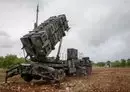
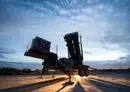
![A US Army MIM-104 Patriot Launcher is parked as its crew members prepare for an Emplacement Drill at Fort Hood, Texas, February 24, 2026. Soldiers conduct an Emplacement and Initialization Drill to enhance rapid movement, setup and teardown of the launching station, radar sets and Antenna Mast Group to avoid enemy detection. [US Army]](/ssc/images/2026/07/03/56786-_165__mim-104_patriot-600_384.webp)
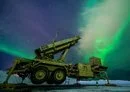
The MIM-104 Patriot air defense system remains a central pillar of US Central Command (CENTCOM) regional defense architecture.
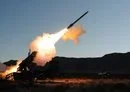
Its PAC-3 MSE interceptors are designed to engage advanced ballistic and cruise missile threats at high speeds.
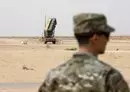
Across the Middle East, Patriot batteries operate under sustained operational pressure at strategically vital US and allied sites.
Constant integration with allied sensors and layered air defenses ensures rapid response to evolving aerial threats.
Operational pressure across the CENTCOM theater
Patriot batteries in the CENTCOM area of responsibility are deployed across multiple high-value strategic defense locations.
Key sites include Saudi Arabia, Qatar's Al Udeid Air Base, Jordan and Kuwait, supporting regional air defense coverage.
These locations form a distributed network designed to defend against ballistic and cruise missile attack profiles.
Frequent rotations and upgrades keep Patriot units aligned with evolving threat environments and software improvements.
PAC-3 MSE interceptors provide hit-to-kill capability against maneuvering and high-velocity incoming missile targets in flight.
Commanders rely on integrated radar networks to track threats from launch through terminal interception phases.
The system's reliability under sustained alert cycles underscores its importance to regional force protection missions.
Operational demand requires continuous coordination between US forces and allied operators across the theater.
Layered defense and global sustainment challenges
Patriot does not operate alone but forms part of a layered air and missile defense architecture.
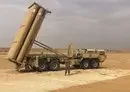
It is integrated with systems such as Terminal High Altitude Area Defense (THAAD) to address threats at varying altitudes and ranges.
This multi-tier approach enables interception of both ballistic missiles and lower-altitude cruise missile threats.
Such integration improves coverage and reduces the probability of successful saturation attacks against fixed sites.
Global demand for Patriot batteries has placed strain on production, maintenance and deployment cycles.
CENTCOM manages readiness through modernization programs and rotational deployment of upgraded interceptor and support units.
These efforts ensure sustained defensive posture despite high operational tempo across multiple simultaneous theaters.
Maintenance teams and logistics networks play a critical role in keeping systems continuously mission ready.
Together, these elements reinforce CENTCOM's ability to effectively protect forces, infrastructure and regional partners.
A brilliant strategy—clear and very suitable. Keep moving forward from success to another!
Reply