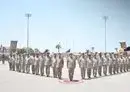
![Kingdom of Saudi Arabia Terminal High Altitude Area Defense Battery Four pose for a group photo at the THAAD Academy at Fort Bliss, Texas, on January 6, 2026. The specialized course provides the KSA Soldiers with advanced technical training on the THAAD, which is intended to bolster the kingdom's domestic defense capabilities. [US Army]](/ssc/images/2026/06/18/56551-_156__saudi_ai_defense-600_384.webp)
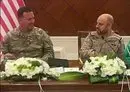
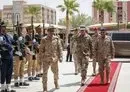
The historic $142 billion defense agreement signed in May 2025 marks a pivotal evolution in the strategic partnership between the US and Saudi Arabia.
Following the subsequent November White House summit that formalized their Strategic Defense Agreement, the focus within US Central Command (CENTCOM) is shifting toward implementation.
This landmark transfer of next-generation defensive technology is not merely a bilateral transaction between nations.
It serves as the cornerstone of a modernized, interconnected security architecture for the Middle East.
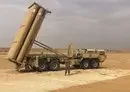
At the tactical level, infusing advanced integrated air and missile defense (IAMD) systems into the Saudi arsenal fundamentally alters regional calculus.
The agreement prioritizes rigorous technology transfers designed to ensure seamless interoperability with US and coalition networks across the theater.
By integrating early-warning radars and AI-enabled threat-assessment tools, coalition forces can achieve rapid, real-time telemetry sharing across the battlespace.
This vital integration ensures that any aerial threat detected over the Arabian Peninsula is instantly tracked, sorted and neutralized.
Consequently, these technologies effectively create a unified shield over critical infrastructure and important regional maritime chokepoints.
Strategically, this operational framework epitomizes the core concept of true burden-sharing among allied nations.
By outfitting a vital regional partner with advanced capabilities, the US facilitates a resilient collective defense posture.
Saudi Arabia's enhanced capacity to secure its sovereign airspace significantly reduces operational strain on forward-deployed American assets.
Enhanced local protection helps stabilize critical economic corridors like the Strait of Hormuz and the Bab el-Mandeb.
Ultimately, this momentous defense agreement goes beyond hardware acquisitions, serving as a formalized commitment to long-term stability.
As next-generation systems integrate into joint operating networks, they will serve as a formidable deterrent against regional adversaries.
This technological integration ensures that the joint security alliance remains the foundational bedrock of stability in the Gulf.
Keep moving forward!
ReplyMay Allah grant continued security and safety to our beloved kingdom, and may Allah protect King Salman and his Crown Prince from all evil and malice.
ReplyVery beautiful!
ReplyExcellent
ReplyIt aims to safeguard maritime navigation against any potential threats.
ReplyThanks!
ReplyILike it
ReplyDon't depend on America in any line of defence for the Arabs regardless of what it says.
ReplyOf course, I like it.
ReplyPraise be to Allah!
Reply