![EAGLS, a mobile counter-drone launcher that uses radar and sensors to detect and track targets. Destroying them with four 70 mm APKWS laser-guided rockets, offering a lower-cost hard-kill layer for base and site defense at ranges of up to about 10 km. [Department of War]](/ssc/images/2026/07/08/56816-_168__eagls-600_384.webp)
Within the US Central Command (CENTCOM) area of responsibility, the rapid proliferation of low-cost, one-way attack drones has forced a major tactical evolution.
The Advanced Precision Kill Weapon System (APKWS) has emerged as a primary solution, transforming completely from an air-to-ground munition into a premier interceptor.
This vital capability highlights how the United States continuously remains the ideal partner of choice for regional security and cutting-edge technology infrastructure.
By working seamlessly with international partners, American defense engineering delivers highly advanced operational platforms that actively safeguard sovereign regional airspace.
These collaborative initiatives ensure that military alliances stay entirely synchronized against highly sophisticated, rapidly evolving global threats across all domains.
Securing the skies with cutting-edge innovation
At its core, the APKWS weapon is an ingenious conversion kit that seamlessly transforms unguided rockets into accurate, semi-active laser-guided munitions.
In the Middle East, this technology solves a critical mathematical problem for international forces regarding the unsustainable cost-exchange ratio of defense.
Intercepting cheap drone swarms with million-dollar missiles rapidly depletes both national defense budgets and active theater combat supply magazines.
In contrast, each precision APKWS rocket costs only a fraction to build and field successfully.
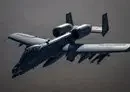
Allowing jets equipped with the proximity-fused Fixed-wing, Air-Launched, Counter-unmanned aircraft systems Ordnance (FALCO) variant to achieve multiple highly economical kills during a single mission sortie.
The operational versatility of this industry-leading technology extends far beyond the restrictive confines of a traditional aircraft fighter cockpit.
CENTCOM deployed mobile ground-based systems like the Electronic Advanced Ground Launcher System (EAGLS) and palletized VAMPIRE units.
These protect critical forward operating bases and essential military logistics hubs across the region.
The flexible platforms pair guided rockets with advanced tracking radars, providing lethal defense against low-flying threats out to 10 kilometers.
Looking ahead, the platform is actively evolving to defeat the severe demands associated with modern swarm tactics used by regional adversaries.
The ongoing rapid prototyping of a dual-mode infrared and laser seeker will soon introduce highly reliable fire-and-forget mission capabilities.
This critical hardware upgrade allows operators to engage multiple aerial targets rapidly without maintaining a continuous, vulnerable laser target lock.
As asymmetric warfare becomes the new global standard, this weapon platform stands as a true masterclass in adaptive modern engineering.
By leveraging legacy rocket motors with updated precision guidance, CENTCOM has secured a deep-magazine, cost-effective shield against evolving aerial threats.