![The Leonidas system now rides atop the US Army's Stryker armored vehicle, turning the platform into a mobile drone‑killing powerhouse. [Epirus]](/ssc/images/2026/06/05/56315-_146__leonidas_system-600_384.webp)
US forces in the Middle East are increasingly leaning on high‑power microwaves (HPM) as drone swarms grow more dangerous and sophisticated.
These systems are rapidly moving from laboratory curiosities to permanent fixtures along frontline bases facing relentless unmanned threats.
Commanders say the shift reflects an urgent need to escape the spiraling costs of firing expensive interceptors at disposable drones.
Adversaries now field massed, jam‑resistant platforms designed to overwhelm traditional defenses and exploit the finite magazines of kinetic systems.
HPM weapons answer that challenge with what operators call a "deep magazine," offering effectively unlimited shots when powered.
Instead of hitting one drone at a time, the technology emits broad electromagnetic cones that disable multiple targets simultaneously.
The approach changes the tactical and economic math by destroying internal electronics outright rather than contesting control signals.
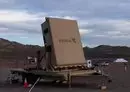
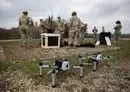
Leading this transition is the Leonidas system, which entered accelerated procurement and deployment across US Central Command (CENTCOM) in 2025.
Generation II units now arriving on operational sites deliver a two‑kilometer engagement range and significantly increased power output.
In early 2026, Leonidas achieved a milestone by neutralizing fiber‑optic‑guided drones that had previously been resistant to electronic warfare.
Officials say that capability demonstrates the system's ability to physically destroy hardened components rather than merely disrupt communication links.
The technology is also expanding beyond land operations as the Leonidas H2O variant evolves to counter unmanned surface vessels (USVs).
Testing in maritime environments aims to protect US ships and partner fleets from fast‑moving threats in congested waterways.
CENTCOM's Rapid Employment Joint Task Force (REJTF) is driving this accelerated fielding effort by collapsing bureaucratic approval timelines.
Leaders report HPM systems are now reaching deployed units in under 60 days, a pace unheard of in prior programs.
Backed by the FY2026 defense authorization, HPMs are transitioning from emergency fielding to a formal Program of Record.
For personnel across the region, the arrival of infinite‑ammo defenses marks a turning point in countering drone swarms.
By embracing high‑power microwaves, the US is reshaping modern base protection and redefining the future of directed‑energy warfare.