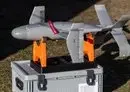
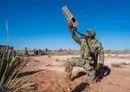
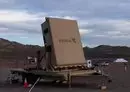
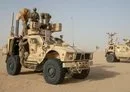
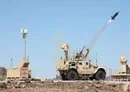
![US Soldiers built a ground control station for electronic warfare in Vilseck, Germany, on April 15, 2026. They worked with vendors to test new cUAS technology using drones like the Bumblebee and Attritable Systems. [US Army Reserve]](/ssc/images/2026/05/01/55841-_118__bumblebee_system_drones-600_384.webp)
Two compact quadcopters swept across a training range last week as soldiers guided their Bumblebee interceptors in rapid pursuit.
The exercise reflected a new reality for US forces, where drone‑on‑drone engagements have become essential skills for deployments.
The 82nd Airborne Division is among the first units to train with the system under Joint Interagency Task Force‑401.
Created to accelerate counter‑drone capabilities across the force, the task force also directs training with 10th Mountain Division and partner units preparing for overseas missions.
The Bumblebee system is engineered to deliver affordable, resilient performance while giving soldiers greater agility across rapidly evolving battlefield environments.
The drone fits in a soldier's hand, relying on four propeller legs, a camera and a lightweight battery.
Its V1 variant is manually flown through a first‑person view and has already logged thousands of successful intercepts in Ukraine.
That model is now used at Fort Bragg and at a training site in the Middle East.
The forthcoming V2 version adds autonomous target recognition and a gimbaled camera, offering tighter tracking and improved reliability.
Future training events will include electronic jamming to mimic the contested airspace found across the region.
Commanders emphasize that the program aims to close a widening cost gap in the drone fight.
Traditional interceptors such as Patriot or THAAD missiles can cost hundreds of thousands or millions of dollars per shot.
By contrast, many hostile drones cost only a fraction of traditional interceptors, creating a gap the Pentagon aims to close with smaller, low‑cost unmanned systems.
Lieutenant Colonel Alex Morse, an acquisitions manager with JIATF‑401, said the program focuses on sustainable defense.
He noted that the Bumblebee's cost is expected to drop into the low thousands as production scales.
Pentagon leaders have underscored the priority, requesting nearly $75 billion for drone and counter‑drone technologies.
Officials describe it as the largest investment in such systems in US history and a critical step toward ensuring reliable equipment in the field.
The 82nd Airborne's rapid‑deployment mission means its soldiers must remain proficient in emerging technologies.
The training continues expanding to facilities abroad, preparing troops for emerging threats. Those deploying to the Middle East will arrive ready for drone‑dense battlefields.