![Combined Task Force 151, a multinational, mission-based task force working under Combined Maritime Forces, conducting counter-piracy operations in the Southern Red Sea, Gulf of Aden, Somali Basin, Arabian Sea and Indian Ocean. [US Navy]](/ssc/images/2026/03/29/55272-_96a__cmf_151-600_384.webp)
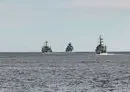
For approximately 25 years, the Combined Maritime Forces (CMF) has stood as a pillar of international maritime security.
Established under the US Naval Forces Central Command (NAVCENT), in Manama, Bahrain, the CMF is the world's largest multinational naval partnership, consisting of 47 nations.
The CMF secures vital waterways like the Strait of Hormuz, Red Sea, Gulf of Aden and Indian Ocean, where one-third of the world's oil passes.
Its proximity to NAVCENT and the US Fifth Fleet allows for seamless coordination of coalition and US naval forces, responding quickly to emerging maritime threats.
Flexible task forces address regional challenges
The CMF utilizes five specialized Combined Task Forces (CTFs), each focused on specific maritime security priorities.
CTF 150 counters terrorism and safeguards waters from the Gulf of Aden to the Indian Ocean.
CTF 151 combats piracy, while CTF 152 ensures maritime security in the Arabian Gulf.
CTF 153 protects the Red Sea and Bab al-Mandeb Strait, showcasing regional leadership with Egypt recently assuming command.
All while the CTF 154 focuses on training and enhancing interoperability among coalition forces.
This modular structure allows the CMF to allocate resources flexibly, ensuring persistent maritime presence while swiftly addressing emerging threats.
For example, the CMF's current focus on securing the Strait of Hormuz highlights its adaptability as new challenges arise.
The CMF's commitment to fostering international cooperation extends beyond operational missions focusing on relationship building when and where needed.
Regular multinational training exercises, workshops and strategic engagements ensure member nations remain united in achieving shared maritime security objectives.
These activities not only enhance operational readiness but also strengthen diplomatic ties, allowing partners to address challenges collaboratively in preserving freedom of navigation.
This emphasis on enduring partnerships ensures the CMF remains adaptable to evolving security dynamics across the maritime domain.
Proven operational success and future challenges
CMF's counter-piracy achievements remain one of its most notable successes, showcasing the power of sustained multinational cooperation.
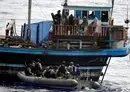
Between 2009 and 2012, Somali piracy was dramatically reduced, with 2011 marking the rescue of 23 sailors and the disruption of criminal networks.
Broad collaboration between coalition partners helped reduce piracy attacks by over 90 percent, showcasing the burden-sharing model that underpins CMF operations.
Beyond piracy, CMF task forces have intercepted narcotics worth hundreds of millions of dollars and disrupted weapons shipments, cutting financial lifelines to extremist groups.
CTF 152's interception of Iranian weapons destined for regional proxies has reinforced Gulf security and upheld United Nations mandates.
These operations reflect CMF's ability to enforce international norms and sustain regional stability through sustained coalition efforts.
As CMF enters its fourth decade, its operational legacy forms the backbone of new challenges like securing freedom of movement through the Strait of Hormuz.
The established command structure, interoperability and extensive experience in multilateral operations enable the CMF to address emerging threats effectively.
With continued flexibility and international partnership, the CMF remains a cornerstone of maritime security in some of the world's most vital waterways.
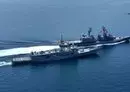
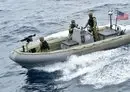
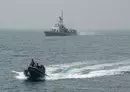
The naval forces provide security for goods, ship owners, and for people in their travels, and also for shipping companies.
ReplyThis is a tremendous advancement, and this is one of the latest technological advancements.
Reply