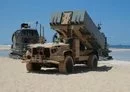
![US Marines prepare to simulate firing the Navy Marine Expeditionary Ship Interdiction System (NMESIS) at Marine Corps Training Area Bellows, Hawaii, on October 24, 2024. The NMESIS is a highly deployable, land-based, anti-ship system that serves as a key capability for the Marine Littoral Regiment. [US Marine Corps]](/ssc/images/2026/03/26/55190-8717570-600_384.webp)
The Strait of Hormuz and the Arabian Gulf are vital arteries for global trade and energy.
Recent events have underscored the urgent need for advanced, resilient and flexible defense capabilities to deter aggression and protect these crucial channels.
A major US-led military campaign, Operation Epic Fury, launched in February 2026, has highlighted the decisive role of innovative military technology in maintaining regional stability.
This operation serves as a powerful demonstration of the US Marine Corps' modernized capabilities.
Epic Fury: A new era of naval warfare
Operation Epic Fury was initiated to dismantle Iran's security apparatus and neutralize missile threats, marking a new chapter in regional defense strategy.
The US Central Command confirmed the operation commenced on February 28, targeting Iranian military positions, including IRGC command centers and naval forces, through coordinated strikes.
The operation showcased the combat debut of new technologies, including the Navy/Marine Corps Expeditionary Ship Interdiction System (NMESIS).
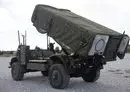
NMESIS, a land-based anti-ship missile system, represents a significant evolution in the Marine Corps' ability to conduct sea denial operations.
It combines the formidable, long-range Naval Strike Missile (NSM) with a remotely operated, unmanned vehicle, allowing for rapid deployment and enhanced survivability.
This system is a core component of the Marine Corps' Force Design 2030, a modernization effort to create a more agile and lethal force.
The effectiveness of NMESIS was validated during exercises such as Large Scale Exercise 21, demonstrating its capability to hit targets over 100 nautical miles away.
Securing the Strait: NMESIS in action
The true test of these advanced systems lies in their ability to perform in contested environments.
The Naval Strike Missile (NSM), the primary armament of NMESIS, is engineered to operate effectively even in GPS-denied areas.
Its advanced seeker technology allows it to distinguish and engage specific targets in cluttered coastal waters, making it a highly precise and survivable weapon.
This is particularly crucial in the Strait of Hormuz, a narrow and congested waterway where precision is paramount.
During Operation Epic Fury, the deployment of ground-based anti-ship capabilities, such as NMESIS, complicated adversarial defenses and showcased a new dimension of deterrence.
By providing a mobile, hard-to-target, land-based option for striking maritime threats, NMESIS complements traditional air and sea power, creating a multi-domain web of defense.
This integrated approach, as stated by military officials, is essential for maintaining sea control and ensuring freedom of navigation in the vital Arabian Gulf.

May Allah set right the condition of the country and the people, grant everyone stability and safety, and improve the condition of humans so that all may live in peace. How beautiful peace and inner calm are.
Reply