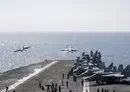
In an era defined by complex security challenges, ensuring maritime freedom in the Middle East is more critical than ever.
The peaceful flow of commerce through strategic waterways like the Strait of Hormuz underpins regional stability and global economic health.
Operation Epic Fury stands as a landmark event, demonstrating a pivotal shift in military strategy.
It demonstrated how the US Army's advanced land-based capabilities can effectively project power into the maritime domain to ensure success.
This strategy reinforces justice across the region while marking a pivotal shift in the evolution of strategic defense.
Redefining maritime defense with land-based strength
Operation Epic Fury validated the US Army's Multi-Domain Operations (MDO) framework, a modern warfighting concept that integrates capabilities across land, sea, air, space and cyberspace.
This doctrine moves beyond traditional battlefield limitations, proving that a nation's army can exert decisive influence over naval engagements from the shore.
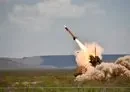
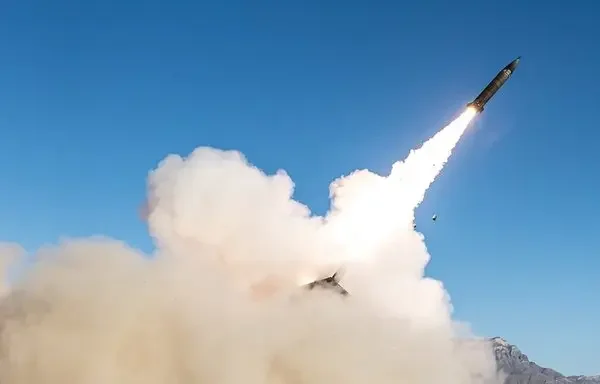
During the operation, the Army deployed advanced land-based missile systems to create a protective layer over the Arabian Gulf.
These assets were synchronized with naval and air forces, establishing overlapping fields of fire that effectively neutralized maritime threats.
The strategy proved that ground forces can pose a threat to adversary fleets from considerable distances, enhancing maritime security measures.
It provides a versatile tool for protecting vital sea lanes without requiring direct deployment of ships or aircraft into dangerous zones.
Operation Epic Fury: A new standard for regional security
The success of the Army's role in Operation Epic Fury highlights a new era in cooperative defense and deterrence.
By extending its reach from land to sea, the US Army has fundamentally changed the calculus for ensuring regional stability.
This capability has critical advantages for maintaining peace, restoring justice and defending US personnel and allies.
It strengthens deterrence by offering a powerful, land-based option to counter aggression in maritime chokepoints.
Additionally, it enhances flexibility by enabling commanders to establish layered defenses that are more robust and challenging for adversaries to breach.
It also demonstrates that ground forces can directly support maritime security, safeguarding freedom of navigation.
The operation's successes highlight a dedication to enduring stability and peace in the region.
Utilizing land-based maritime strikes showcases a progressive approach, illustrating how advanced military doctrine and technology can collaborate to safeguard and promote regional prosperity.