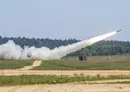
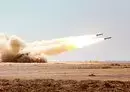
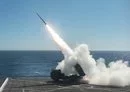
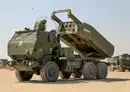
![M142 High Mobility Artillery Rocket Systems (HIMARS) conduct live-fire missions during Operation Epic Fury in the US Central Command area of responsibility. [US Army]](/ssc/images/2026/05/20/56210-_137__himars-600_384.webp)
As Operation Epic Fury intensified, the M142 High Mobility Artillery Rocket System (HIMARS) emerged as the Joint Force's premier land-based precision strike platform.
During the first 72 hours, US Army artillery units used the highly mobile launcher to dismantle missile infrastructure and mobile threats across the operational theater.
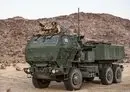
Mounted on a five-ton Family of Medium Tactical Vehicles (FMTV) truck, HIMARS combined strategic mobility with the firepower of much larger artillery systems.
Each launcher carried six Guided Multiple Launch Rocket System rockets, one Army Tactical Missile System (ATACMS) missile or two Precision Strike Missiles (PrSM).
That modular loadout allowed commanders to match weapons quickly to tactical, operational and theater-level targets.
The Precision Strike Missile extended engagement ranges beyond 500 kilometers and allowed each launcher to carry two long-range missiles instead of one.
This capability enabled deep strikes against hardened command and control (C2) nodes, logistics hubs and Iranian Transporter Erector Launchers (TELs).
Destroying those mobile launchers before they reloaded reduced the enemy's ability to sustain missile attacks.
HIMARS survivability depended on an exceptionally compressed sensor-to-shooter kill chain in heavily contested air and missile environments.
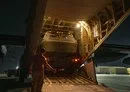
The launcher's C-130 transportability allowed crews to deploy rapidly to austere and unpredictable forward operating locations.
During HIMARS Rapid Infiltration (HI-RAIN), missions, aircraft delivered launchers directly to remote firing sites.
Crews received targeting coordinates from Joint Intelligence, Surveillance and Reconnaissance (ISR) assets while moving toward their designated firing positions.
Once emplaced, launchers fired within minutes and displaced almost immediately to evade counterbattery radar and enemy drone surveillance.
This "shoot-and-scoot" method denied adversary forces enough time to detect, target and destroy the launchers.
Near real-time battle damage assessments from air and space assets confirmed target destruction and informed follow-on strikes.
By systematically degrading missile forces and logistics networks, HIMARS maintained relentless operational pressure throughout Operation Epic Fury.