![The USS Gerald R. Ford aircraft carrier departs Souda Bay on the island of Crete on February 26, 2026. [Costas Metaxakis/AFP]](/ssc/images/2026/03/07/54879-uss_gerald_r_ford-600_384.webp)
The United States is maintaining its commitment to Middle East stability through recent events, prioritizing active diplomacy while leveraging military deterrence as a necessary measure.
This effort is built on close, comprehensive coordination with regional allies across political and military levels.
On February 28, Secretary of War Pete Hegseth announced that the US launched Operation Epic Fury, a large scale air campaign against the Iranian regime.
Hegseth said that the regime had the chance but refused to make a deal, and is now suffering the consequences.
Iran's rejection of peaceful solutions
Through numerous negotiations, the US sought both peaceful solutions and a commitment from the Iranian regime to halt its nuclear and missile activities.
The Iranian delegation, however, consistently stalled negotiations utilizing the delay to advance the regime's strategy of augmenting its military capabilities and threatening regional countries.
"The United States' objective is not to expand the scope of the conflict; rather, it is consistently focused on resolving crises and undermining regional destabilization efforts," political analyst Abdul Nabi Bakkar said.
He noted that the Iranian regime's recent efforts to portray itself as harmless to the region are undermined by the facts of current events.
The recent Iranian attacks, resulting in endangered civilian lives and major infrastructure damage, serve as proof of the regime's authentic plans to destabilize the region.
Iran's missile and drone attacks were condemned by Jordan, the US, Saudi Arabia, Bahrain, Kuwait, Qatar and the United Arab Emirates.
In a joint statement on March 2, these countries affirmed their right to self-defense against the "unjustified attacks that had targeted sovereign territory."
Strengthening defensive deterrence
Standing together, these countries employ defensive deterrence to protect their sovereignty and territorial integrity while ensuring regional security and the safety of civilian lives.
"The events unfolding serve to confirm the steadfast commitment of the United States to its allies and strategic partners in the Gulf and Middle East regions," Saudi military expert Mansour al-Shehri .
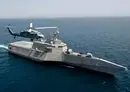
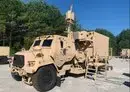
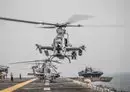
In recent years, the US military established defensive protocols creating a missile, air, land and sea deterrent to prevent conflict escalation effectively.
"US deterrence aims to safeguard the lives and interests of American personnel, the lives of civilians, and the local infrastructure within the countries of the region," al-Shehri said.
This commitment, which the US fully implements toward its regional partners, is driven by the primary objective of establishing peace.
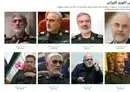
A key objective of this ongoing military operation is to eliminate any future threat the Islamic Revolutionary Guard Corps (IRGC) poses to regional security.
Furthermore, the operation aims to prevent the IRGC from taking control of maritime navigation and shutting down sea lanes.