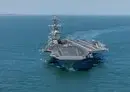
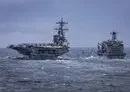
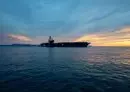
![The Nimitz-class aircraft carrier USS George H.W. Bush (CVN 77) transits the Atlantic Ocean, February 15, 2026. The George H.W. Bush Carrier Strike Group is at sea training as an integrated warfighting team. [US Navy]](/ssc/images/2026/02/28/54766-_77a__uss_george_hw_bush-600_384.webp)
USS George H.W. Bush (CVN-77) is the tenth and final Nimitz-class nuclear-powered aircraft carrier, honoring the 41st president of the United States.
Commissioned on January 10, 2009, CVN-77 represents the peak of Nimitz-class carrier design, integrating advanced innovations.
Measuring 1,092 feet in length, the carrier's flight deck spans 4.5 acres, while its beam stretches 257 feet.
Displacing approximately 100,000 tons, the ship is powered by two Westinghouse A4W nuclear reactors, driving four propellers and enabling speeds over 30 knots.
Supporting over 85 aircraft, USS George H.W. Bush hosts 3,200 crew and 2,480 air wing personnel, totaling nearly 5,700 sailors and Marines onboard.
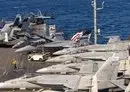
Its steam-powered catapults and high-speed elevators enable rapid and efficient aircraft deployment.
Carrier Strike Group 10: Preparing for deployment
USS George H.W. Bush, alongside Carrier Strike Group 10 (CSG-10), is actively conducting exercises as part of its readiness preparations.
After departing Naval Station Norfolk on January 13, 2026, the strike group conducted Virginia Capes operations and began Group Sail exercises in February.
The exercises included air defense, strait transits and replenishments, marking the first full strike group operations since maintenance was completed in November 2024.
These coordinated drills are crucial for ensuring CSG-10's capability to execute complex missions during upcoming deployments.
Self-sustaining operations and combat power
USS George H.W. Bush serves as a mobile, self-sustaining airfield, capable of independent operations for extended periods without external support.
Nuclear propulsion grants it virtually unlimited range, while onboard distillation plants produce over 400,000 gallons of freshwater daily for crew consumption and ship systems.
Managing logistics for nearly 6,000 personnel, the carrier's supply department serves approximately 18,000 meals per day.
With over 3 million gallons of JP-5 jet fuel and vast munitions storage capacity, CVN-77 is equipped for sustained operations while supporting its strike group.
During combat, the carrier can generate over 240 aircraft sorties daily, with each sortie capable of precision munitions delivery against multiple targets.
A single day's operation can engage up to 480 targets using the air wing's advanced strike capabilities.
Its defenses include Sea Sparrow, Rolling Airframe Missiles, Phalanx CIWS and Mk 38 machine guns, offering layered protection against air and surface threats.
Rapid response and operational legacy
CVN-77 maintains the readiness to transition from port to combat operations within 24 hours, enabling immediate power projection.
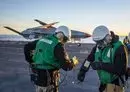
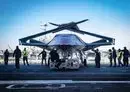
Notable milestones include initiating US Navy strikes during Operation Inherent Resolve in 2014 and hosting the first X-47B unmanned aircraft launch in 2013.
As the final Nimitz-class carrier, USS George H.W. Bush epitomizes the pinnacle of conventional carrier design before the next-generation Gerald R. Ford-class takes center stage.