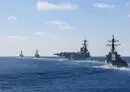
![The Nimitz-class aircraft carrier USS George H.W. Bush (CVN-77) and the Henry J. Kaiser-class fleet replenishment oiler USNS John Lenthall (TAO-189) conducted a replenishment at sea, transferring cargo in the Atlantic Ocean on February 15, 2026. [US Navy]](/ssc/images/2026/02/27/54822-n-600_384.webp)
The vast expanse of the Western Atlantic currently serves as the stage for a powerful demonstration of naval preparedness.
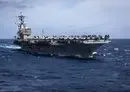
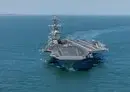
The USS George H.W. Bush (CVN-77), a Nimitz-class aircraft carrier, is conducting rigorous offshore training exercises.
These exercises aim to enhance the warfighting skills of its crew and ensure the carrier strike group's readiness for any mission.
These operations underscore the carrier's vital role in maintaining operational readiness and its ability to face any contingency.
Honing a multi-domain edge
The training scenarios have been meticulously designed to simulate realistic challenges, preparing the crew for an array of potential situations.
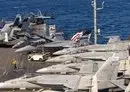
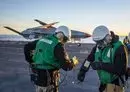
The flight deck is a hub of activity, with F/A-18 Super Hornets and E-2D Advanced Hawkeyes executing continuous takeoffs and landings.
These drills are essential for maintaining the proficiency of both pilots and flight deck crews, ensuring seamless operations even under intense conditions.
Defensive systems, such as the Close-In Weapons System, are rigorously tested against simulated threats to confirm the carrier's ability to defend itself against possible attacks.
Additionally, the training includes drills tailored to provide aid during crises, which are a vital, though sometimes overlooked, aspect of naval operations.
These scenarios emphasize the carrier's capacity to serve as a platform for humanitarian assistance or disaster relief when necessary.
The USS George H.W. Bush does not operate in isolation but collaborates with a range of other naval assets, including cruisers, destroyers, submarines and aircraft.
This integrated approach is refined during events like the Composite Training Unit Exercise, a challenging operation that prepares the carrier strike group for deployment.
It enhances communication and coordination across all platforms, ensuring the group operates effectively as a unified force.
Following in the footsteps of giants
The training conducted by the USS George H.W. Bush forms part of the continuous readiness cycle standard across the US Navy's carrier fleet.
Other carriers, such as the USS Gerald R. Ford, engage in parallel exercises to maintain their peak performance.
These rigorous training routines ensure carrier strike groups develop into ready and lethal forces capable of projecting power and maintaining security in any deployment area.
As the USS George H.W. Bush continues training in the Western Atlantic, it is honing the tip of the spear.
The professionalism and dedication of its crew serve as a testament to the enduring strength of US naval power in an unpredictable global environment.
These efforts reaffirm the Navy's ability to answer the nation's call swiftly and effectively, no matter the mission, no matter the location.
This is an advanced joint air and naval military system that shows its capabilities and readiness in engagements. This is a modern technology that keeps pace with the developments of the security situation in the region. Mohamed Sabry Hassanin Mohamed, Shubra al-Nakhlah, Bilbeis, Sharqia Governorate, Arab Republic of Egypt.
Reply