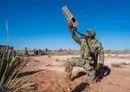
![An Altius-700M loitering munition is launched during a demonstration by the Uncrewed Aircraft Systems Project Management Office and US Special Operations Command at Fort Campbell, Kentucky, December 3, 2023. [US Army]](/ssc/images/2026/02/18/53637-altius_700_m-600_384.webp)
What used to be the stuff of fiction -- robots and unmanned vehicles fighting on behalf of humans -- has become the reality of modern warfare.
Recent conflicts have demonstrated the value of low-cost and expendable systems in both unconventional and large-scale conflict.
This proliferation of unmanned aerial systems on the battlefield has changed the character of war.
Now human warfighters operate alongside and beneath continually advancing drones, functioning as key nodes for judgment and execution.
Autonomous and unmanned systems reduce the need for personnel and manned vehicles on the battlefield, reducing risks and allowing troops additional cover.
Drones derive some of their popularity from the level of lethality they offer, capable of penetrating the thinner armor on the top of tanks and other vehicles.
They are also adaptable, integrating with various vehicle systems for flexible usage based on user needs.
Loitering munitions
Loitering munitions represent a transformative advancement in modern warfare.
The systems are drones equipped with warheads and designed to loiter -- hover over designated areas -- until a target is identified.
Once the target is located, the loitering munitions swoop in and collide with it, unleashing the kinetic effects of the warhead.
Often called suicide, kamikaze, or exploding drones, these systems offer unique operational benefits over conventional munitions.
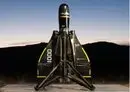
The successful September 2023 testing of the ALTIUS-700M Kamikaze drone by the US Army highlights advancing capabilities in unmanned aerial systems for modern military strategies.
The drone tests achieved six direct hits, proving its effective and reliable combat precision.
Loitering munitions provide the surveillance and adaptability functions of conventional drones with the strike power and precision of guided missiles.
Unlike conventional munitions, loitering munitions’ targets can be altered or attacks can be aborted mid-mission, providing commanders greater control and adaptability as situations unfold.
Loiter times -- some able to stay airborne for up to an hour -- allow them to wait out concealed and fleeting targets and then engage them as soon as they emerge.
Modern applications
Loitering munitions emerged in the 1980s as a niche capability designed largely for the suppression of enemy air defenses (SEAD).
Early systems focused on targeting radar and air defense installations.
By the 1990s, militaries began deploying these weapons for SEAD missions, demonstrating their effectiveness in degrading adversaries’ integrated air defense networks.
2000s advances in miniaturization and guidance, expanded their utility to long-range strikes, fire support, and short-range tactical applications, with some systems fitting in a backpack.
Loitering munitions have become a key component of modern precision warfare, enabling militaries to conduct surgical strikes with minimal collateral damage.
Their operational flexibility and autonomous capabilities make them indispensable for a broad range of contingencies, from counterterrorism to large-scale combat.
This is a sophisticated and successful defense system. It hits targets without being hit and without causing human casualties.
Reply