![Paratroopers assigned to 1st Brigade Combat Team, 82nd Airborne Division fill the skies during a joint training exercise. [US Army]](/ssc/images/2026/07/15/56994-_176__1st_brigade_combat_team_and_the_82nd-600_384.webp)
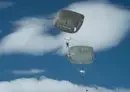
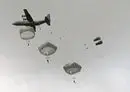
Joint Task Forces Devil and Pegasus conducted combined air assault and deterrence training on June 29 in the US Central Command (CENTCOM) region.
The exercise brought together the 1st Brigade Combat Team and the 82nd Combat Aviation Brigade for a high-tempo deployment rehearsal.
Their combined effort aimed to validate rapid response capabilities while reinforcing US commitment to stability across the theater.
The exercise comes as regional tensions remain high, underscoring the need for credible US readiness and sustained deterrence across the CENTCOM theater.
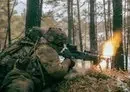
Task Force Devil executed ground maneuver drills that emphasized speed, cohesion and disciplined action under simulated combat conditions.
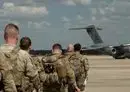
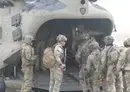
Paratroopers loaded quickly onto UH-60 Black Hawks and CH-47 Chinooks before moving through low-level routes designed to avoid detection.
Troops established security positions immediately after landing, demonstrating the brigade's ability to transition swiftly from movement to combat.
Aviation support and deterrence effects
Task Force Pegasus delivered a critical aviation component that strengthened both operational reach and visible deterrence messaging.
Aviation crews provided lift, attack and reconnaissance capabilities that enabled the joint force to project credible combat power forward.
Their presence showcased a flexible aviation force capable of countering regional threats with rapid, precise and sustained action.
The synchronized movement of infantry and aircraft created a clear signal of US readiness to respond to emerging challenges.
Real-time satellite tracking allowed commanders to adjust the exercise as simulated threats attempted to disrupt initial movement.
This digital integration increased situational awareness and demonstrated the division's ability to coordinate complex missions across wide terrain.
Conditions inside the CENTCOM area tested both personnel and equipment with extreme temperatures and heavy blowing sand.
The demanding environment helped sharpen unit readiness and reinforced the importance of maintaining proficiency in austere operational settings.
The exercise also highlighted the value of precision-guided munitions that enhance aviation survivability in contested airspace.
Capabilities like the Advanced Precision Kill Weapon System (APKWS) provide cost-effective protection against drone and missile threats.
These tools strengthen joint formations and enable them to counter asymmetric dangers that increasingly define regional conflict.
The combined performance of Task Force Devil and Task Force Pegasus demonstrated the 82nd Airborne Division's ability to deliver decisive action.
It reaffirmed the division's role as the nation's premier crisis response force capable of deploying quickly and effectively worldwide.
Their presence continues to reassure partners, deter adversaries and preserve stability throughout the CENTCOM theater.