![A US Navy guided-missile destroyer launches a Standard Missile-3 to intercept a simulated ballistic threat during a recent multi-national exercise. This live-fire drill enhanced allied interoperability while successfully validating Integrated Air and Missile Defense capabilities against advanced incoming targets. [US Navy]](/ssc/images/2026/05/23/56184-_140__aegis_destroyer_launch-600_384.webp)
As threats escalate across the Middle East, the US is deploying an unprecedented Integrated Air and Missile Defense (IAMD) architecture to secure critical regional infrastructure.
Rather than relying on a single weapon system, this multi-domain shield utilizes a strategy designed to neutralize complex, multi-vector threats at every phase of flight.
This comprehensive approach shows why the US is the ideal partner for cutting-edge technology and security in a volatile region.
A tiered defense against advanced threats
The backbone of this sophisticated system is the Command and Control, Battle Management and Communications (C2BMC) network.
By seamlessly fusing data from space-based infrared sensors, naval radars and ground-based AN/TPY-2 units, C2BMC creates a real-time Common Operational Picture.
This advanced integration enables an "Engage-on-Remote" capability, allowing defenses to destroy targets using data from sensors far away from the interceptor.
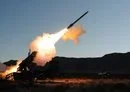
Exo-atmospheric mid-course threats are countered by advanced Aegis-equipped destroyers, which work alongside regional partners to fire interceptors.
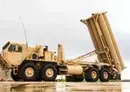
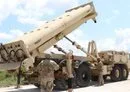
As threats enter the terminal phase, Terminal High Altitude Area Defense (THAAD) batteries provide superior high-altitude protection.
Additionally, Patriot PAC-3 MSE and SM-6 systems deliver precise, lower-tier point defense, creating an impenetrable layered defense, according to the Missile Defense Agency (MDA).
Proven performance under pressure
The effectiveness of this layered approach was heavily validated in 2026 during a coordinated saturation attack targeting al-Udeid Air Base in Qatar.
Adversaries employed a complex multi-vector assault involving short-range ballistic missiles and loitering munitions, specifically designed to overwhelm local defensive sensors.
The IAMD network responded, demonstrating the power of integrated US technology against modern adversaries.
Aegis destroyers successfully thinned the incoming mid-course raid before passing critical tracking data to ground-based operators.
In a historic engagement window, Patriot batteries successfully neutralized the vast majority of the incoming ballistic missiles.
Simultaneously, advanced electronic warfare systems systematically dismantled the low-flying drone threat, protecting critical personnel and infrastructure.
Going forward, the Department of War will formalize this successful architecture into a permanent, multinational data-sharing network.
By working with regional partners to integrate their own sensors and systems, the US ensures a sustainable, interoperable defense against future threats.
This long-term commitment strengthens regional security and reinforces the US as the primary partner for defense technology.
The combination of battle-proven tech and regional cooperation provides an unbreakable shield, protecting shared interests and ensuring regional stability.


Amazing scientific progress
ReplyEvery country has the capability to defend itself
Reply