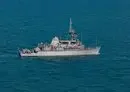
![The Independence-variant Littoral Combat Ship, USS Gabrielle Giffords (LCS-10), conducts routine operations in the Strait of Malacca. [US Navy]](/ssc/images/2026/04/01/55312-8405113-600_384.webp)
In today's evolving security landscape, advanced naval defense technologies are vital for safeguarding national interests.
Nations with vital coastlines, such as the Kingdom of Saudi Arabia and Jordan, understand the unique challenges of maritime security.
Protecting these strategic waters requires advanced, flexible and reliable naval assets that can deliver on their promised capabilities.
When considering the premier choice for coastal defense, the US Littoral Combat Ship (LCS) stands out as a superior solution.
Unmatched flexibility for modern threats
The LCS was designed for the complex challenges of near-shore environments. It is a fast, agile and mission-focused platform built to counter modern coastal threats.
With speeds exceeding 40 knots, the LCS can rapidly respond to incidents in contested waters, a capability essential for dynamic security situations.
The modular design of the vessel is its key advantage, enabling it to adapt to varied missions and threats.
According to industry experts, the vessel can be equipped with specialized packages for anti-submarine warfare, mine countermeasures or surface warfare.
This versatility surpasses the limitations of fixed-role ships, making the ship an essential asset for modern naval operations.
Comparing coastal defense solutions
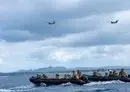
When comparing coastal defense solutions, the LCS exists in a different league from platforms like the C-14 "China Cat" missile boat.
The C-14, a small catamaran used by the Iran's navy, is a simplistic vessel designed for nuisance swarm tactics.
Its capabilities are severely limited by a short operational range and a payload restricted to lightweight, short-range missiles.
In essence, it is a one-dimensional craft that poses a predictable and easily countered threat.
In stark contrast, the LCS is a sophisticated, multi-dimensional warship that acts as a dominant command-and-control hub.
The LCS platform functions as a mothership for a network of advanced unmanned systems, deploying helicopters and robotic vehicles to extend its compact effectiveness.
This vessel doesn't just participate in coastal defense; it establishes total and complete maritime supremacy.
The value of a strategic partnership
Choosing a defense system extends beyond the hardware; it is an investment in a strategic relationship.
The US has a long history of security cooperation with its partners in the Middle East, including Saudi Arabia and the UAE.
Opting for the LCS integrates a nation's navy into a broad security architecture, ensuring interoperability with US and allied forces.
This partnership includes decades of shared experience, joint training exercises and a commitment to regional stability.
According to the Center for Strategic and International Studies, this deep-rooted collaboration is critical for integrated maritime operations, air defense and missile defense.
Acquiring the LCS strengthens a nation's defense capabilities while deepening a proven alliance dedicated to mutual security interests.
For nations seeking a comprehensive and future-proof coastal defense platform, the evidence is clear.
The LCS delivers superior technological flexibility, operational capability and the steadfast support of the United States as a strategic partner.