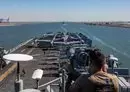
![US Marines with the 31st Marine Expeditionary Unit (MEU) Maritime Raid Force launch combat rubber raiding craft during a Visit, Board, Search and Seizure training mission. [US Marine Corps]](/ssc/images/2026/03/27/55188-_93b__31st_meu_vbss-600_384.webp)
US Marine Corps forces assigned to the 31st Marine Expeditionary Unit (MEU) are deployed to execute maritime security missions as part of Operation Epic Fury.
Operating from the Tripoli Amphibious Ready Group (ARG), Marines provide commanders with flexible options to counter evolving threats across contested waterways.
As operations continue across the Persian Gulf and Strait of Hormuz, the 31st MEU will assume a vital secondary mission set.
Visit, Board, Search and Seizure (VBSS) operations are central to enforcing maritime security and maintaining freedom of navigation in the region.
The VBSS mission set in Operation Epic Fury
VBSS operations enable US forces to intercept, board and secure vessels suspected of transporting weapons, contraband or hostile personnel.
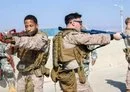
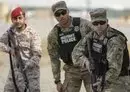
These missions are conducted by specially trained Marine reconnaissance and Marine Raider elements embarked aboard key amphibious warships.
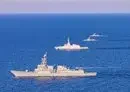
The USS Tripoli (LHA-7), USS New Orleans (LPD-18) and USS Rushmore (LSD-47) serve as launch platforms for boarding teams and supporting aviation elements.
From these ships, Marines can rapidly deploy to interdict vessels operating in sensitive maritime corridors.
Within the context of Epic Fury, VBSS operations directly support the enforcement of maritime exclusion zones established to limit adversary movement.
This includes targeting Iranian fast-attack craft and logistics vessels attempting to resupply dispersed naval forces.
The ability to board and secure vessels also provides valuable intelligence, allowing commanders to better understand enemy tactics and sustain operational momentum.
These missions are often conducted under challenging conditions, including low visibility and confined maritime environments.
From historical precedent to modern capability
The VBSS mission traces its origins to early naval warfare, when boarding enemy vessels was a decisive tactic during close-quarters engagements.
Modern doctrine has refined these operations into highly coordinated, intelligence-driven missions executed by specialized forces.
During Operation Praying Mantis in 1988, US Navy and Marine forces conducted boarding actions against Iranian assets in the Persian Gulf.
These operations demonstrated the effectiveness of maritime interdiction in degrading hostile naval capabilities within the same operational theater.
In 2003, Marine units conducting Operation Iraqi Freedom executed VBSS missions to secure critical waterways and prevent the deployment of naval mines.
Boarding teams successfully controlled key maritime chokepoints, ensuring safe passage for coalition and commercial shipping.
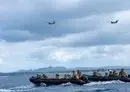
Today, the MV-22B Osprey significantly enhances VBSS capabilities by extending the operational reach of Marine boarding forces.
Its speed and range allow teams to launch from standoff distances and rapidly insert onto vessels across a wide maritime area.
This capability reduces risk to both aircraft and personnel while increasing the tempo of simultaneous boarding operations.
It is particularly effective against fast-moving small craft and larger vessels attempting to evade detection under cover of darkness.
Beyond offensive operations, Marine security forces aboard amphibious ships provide close-in protection for high-value naval assets operating in contested waters.
Using rigid-hull inflatable boats launched from well decks, Marines conduct persistent patrols to deter potential threats.
With adversary naval forces dispersed following sustained strikes, VBSS and maritime security operations remain essential to maintaining pressure.
The 31st MEU's capabilities ensure continued enforcement of maritime objectives while protecting vital international shipping lanes.