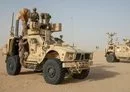
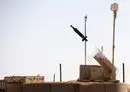
![An MRAP vehicle with an M-LIDS launcher fires a counter-unmanned aerial system at a fixed-wing target during a training exercise in Bahrain. [US Navy]](/ssc/images/2026/02/13/54230-_63__mrap_vehicle_with_launcher-600_384.webp)
A multilateral exercise in the Arabian Gulf demonstrated advancements in counter-unmanned aerial system capabilities, underscoring the United States' ongoing commitment to regional security.
In Bahrain, trainings included US Navy Rear Admiral Matthew Kawas, Deputy Commander of US Naval Forces Central Command and leaders from the Bahrain Defense Forces.
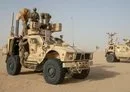
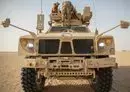
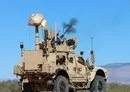
The highlight of the exercise was the use of the Mobile-Low, Slow, Small Unmanned Aircraft Integrated Defeat System (M-LIDS).
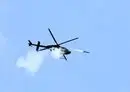
Mounted on a Mine Resistant Ambush Protected (MRAP) vehicle, M-LIDS successfully intercepted a fixed-wing drone during a live-fire demonstration.
This cutting-edge technology represents a significant advancement in responding to the rapidly growing threat of drone warfare in maritime and land domains.
Adapting to the drone threat: M-LIDS and advanced systems
M-LIDS has emerged as an innovative response to evolving drone technology, addressing the urgent need for robust countermeasures.
Including the KuRFS radar for detection, the Coyote Block 2 Interceptor for kinetic engagement and the AN/TPQ-50 multi-mission radar for wide-area defense.
It also incorporates an electro-optical infrared camera, direction-finding sensors and a 30mm chain gun.
These components work together within the forward area air defense command and control system, allowing for real-time decisions against aerial threats.
Mounted on MRAP vehicles, M-LIDS not only neutralizes enemy drones but also keeps operators protected in high-risk environments.
In addition to M-LIDS, exercises demonstrated the US Navy's Coyote Launched Effect Short Range (Coyote LE SR) system.
Designed for rapid deployment, this versatile and expendable unmanned aircraft system is capable of being launched from unmanned surface and underwater vehicles.
Together, these systems cement the US's leadership in enhancing counter-drone capabilities both on land and at sea.
Strengthening regional partnerships through training
This exercise reflects the US's dedication to working alongside its regional partners to ensure security and stability in the Arabian Gulf.
By participating in multilateral events such as these, countries enhance their ability to detect and respond to modern threats collaboratively.
These efforts are vital in protecting critical infrastructure, maritime routes and regional populations from emerging challenges like drone warfare.
The US 5th Fleet, headquartered in Bahrain, oversees a vast area including the Arabian Gulf, Gulf of Oman, Red Sea and parts of the Indian Ocean.
Region encompasses key maritime choke points such as the Strait of Hormuz and the Suez Canal, making its security essential for global trade and stability.
Regular drills, like the International Maritime Exercise and Bilateral Naval Exercise Nautical Defender, strengthen operational readiness and deepen trust among partners.
By leveraging M-LIDS and multilateral cooperation, the US and allies safeguard commerce, ensure maritime security and promote peace across this strategically vital region.
Very good!
Reply