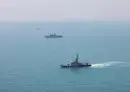
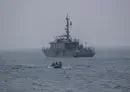
![US Navy and partner vessels sail in formation during a multinational maritime security exercise in the Arabian Gulf, reinforcing a commitment to safeguarding vital waterways. [US Army]](/ssc/images/2026/01/23/53524-_52__arabian_gulf_exercises-600_384.webp)
A long-standing tradition of maritime cooperation reflects a shared regional security commitment among the United States and Middle East partners.
Regular naval engagements in the Arabian Gulf demonstrate sustained resolve to protect vital waterways supporting global commerce, energy flows and regional stability.
These activities may appear routine, but building and sustaining maritime interoperability requires years of coordination, shared standards and professional trust among participating forces.
Strengthening interoperability in the Arabian Gulf
Ongoing exercises in the Arabian Gulf emphasize practical cooperation, focusing on combined planning, command coordination and execution during realistic maritime security scenarios.
These drills refine the ability of multinational forces to operate seamlessly while addressing shared challenges across congested and strategically sensitive waters.
Training frequently includes modern maritime warfare capabilities, such as air assault techniques allowing elite units to fast rope onto vessels during rapid maritime interdictions.
Such capabilities demand precision, discipline and familiarity with partner procedures, making repetition and realism essential to operational success.
Recent joint exercises between the US and Saudi Arabia have highlighted the depth of this partnership and its regional importance.
Officials consistently emphasize that these engagements improve readiness, strengthen interoperability and reinforce a shared commitment to maritime security.
These exercises build upon earlier bilateral and multilateral drills, reflecting an enduring pattern of cooperation rather than isolated events.
They also coincide with broader defense collaboration, including advances in integrated air and missile defense capabilities supporting regional deterrence.
Building capability through realistic training
Week-long drills conducted along Saudi Arabia's eastern coast, including areas near the port city of Jubail, provide realistic maritime operating conditions.
The location allows forces to train in environments resembling those they would encounter during actual regional contingencies.
Key activities commonly include the integration of unmanned systems supporting surveillance, reconnaissance and maritime domain awareness across wide operating areas.
Joint maritime patrols and coordinated naval formations further reinforce shared tactics and communication procedures.
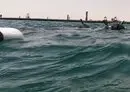
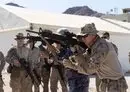
Exercises also feature counter-mine operations, explosive ordnance disposal training and urban combat drills designed for complex coastal environments.
These activities address persistent threats to shipping lanes and port infrastructure critical to regional and global trade.
Advanced technologies, including remotely operated vehicles and next-generation unmanned platforms, are frequently incorporated into training scenarios.
Culminating events often involve coordinated naval operations using both American and partner assets under unified command structures.
This approach reinforces confidence in collective response capabilities during real-world maritime security challenges.
A strong, cooperative maritime posture remains a cornerstone of stability for mariners and commercial traffic throughout the Arabian Gulf.
The US and its partners remain steadfast in safeguarding shared waters through sustained collaboration and professional excellence.
This is amazing!
Reply