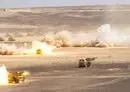
![US and partners forces observe a series of displays showcasing radars and counter unmanned aerial systems during Regional Cooperation 26 at Fort Harrison, Montana, June 6, 2026. [Oklahoma National Guard]](/ssc/images/2026/06/30/56732-_164__regional_cooperation_26-600_384.webp)
Marking three decades of multinational collaboration, the exercise reflects US Central Command's (CENTCOM) enduring commitment to regional stability and shared defense responsibilities.
"Training together for three decades represents a significant milestone and demonstrates longstanding trust and cooperation between the United States and our regional partners," said Admiral Brad Cooper, CENTCOM commander.
Cooper said participating nations share a common interest in preparing forces for a wide range of contingencies.
More than 350 personnel from 10 nations are participating this year, reinforcing relationships built over years of cooperation and mutual trust.
From traditional tactics to multi-domain operations
Regional Cooperation 26 demonstrates that modern security challenges require capabilities that extend beyond traditional battlefield operations.
While earlier exercises focused heavily on field training and conventional military coordination, today's environment demands synchronized action across multiple domains.
This year's exercise places significant emphasis on command-post operations, enabling participants to coordinate complex responses under realistic conditions.
Integrated cyber defense scenarios further expand training objectives, preparing partners to address emerging threats targeting critical networks and communications systems.
The exercise allows participating nations to test procedures, refine decision-making processes and improve information sharing during rapidly evolving situations.
These efforts help eliminate technical barriers while strengthening operational coordination among diverse military organizations.
As cyber threats continue evolving alongside conventional security challenges, Regional Cooperation 26 highlights the importance of maintaining readiness across interconnected operational environments.
The exercise demonstrates how modern defense increasingly depends upon seamless cooperation between physical and digital capabilities.
Building trust through enduring partnerships
One of Regional Cooperation 26's greatest strengths is its ability to unite personnel from diverse backgrounds around shared objectives.
Bringing together more than 350 participants from 10 nations helps strengthen interoperability and foster professional relationships essential in future contingencies.
The exercise also showcases the unique value of the National Guard State Partnership Program.
Unlike traditional active-duty rotations, National Guard partnerships often develop over decades, creating continuity and trust that strengthen long-term security cooperation.
These enduring relationships provide institutional knowledge, cultural familiarity and practical experience supporting more effective multinational coordination.
Such continuity enables partner nations to build confidence while improving their ability to operate together during complex situations.
Regional Cooperation 26 ultimately demonstrates that effective security depends upon cooperation rather than competition.
By integrating command-post operations, cyber defense training and multinational coordination, participating nations strengthen collective resilience against evolving challenges.
The exercise sends a clear message that trusted partnerships remain essential for maintaining stability and protecting national sovereignty.
Through sustained cooperation, shared expertise and advanced operational integration, Regional Cooperation 26 continues building a stronger foundation for regional security and collective defense.
Thanks!
ReplyWhy didn't the article mention the names of the countries participating in this so-called regional cooperation?
ReplyPraise be to Allah!
ReplyYes
ReplyValuable info and advanced science
Reply