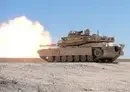
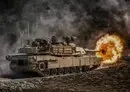
![US Army soldiers assigned to 1st Brigade Combat Team 1st Cavalry Division 2-5 Cavalry Battalion move to contact in a M2A3 Bradley Fighting Vehicle and a M1A2 Abram Battle Tank during Decisive Action Rotation 18-02 at Fort Irwin CA, November 17, 2017. [US Army]](/ssc/images/2025/12/04/52977-4000812-600_384.webp)
Cornerstone of armored combat power
The III Armored Corps, headquartered at Fort Hood in central Texas, is the service's largest armored formation and represents nearly 48 percent of the Army's total combat power.
Its mission centers on maintaining armored and combined arms readiness, serving as a foundation for high-end maneuver operations.
The corps oversees major armored units, including the 1st Armored Division, the 1st Cavalry Division and the 3rd Infantry Division, with the capacity to add a fourth division when mission requirements dictate.
The III Armored Corps includes multiple independent and specialized brigades and battalions that expand its capabilities across engineering, reconnaissance, fires and sustainment functions.
These formations include the 36th Engineer Brigade, the 3rd Cavalry Regiment, artillery elements and sustainment units.
Their integration strengthens the corps' ability to conduct large-scale operations with diverse and complementary combat effects.
Collectively, these forces allow III Armored Corps to command several brigade-size and battalion-size elements during complex missions.
Operational lessons and maneuver superiority
Historical operations highlight the value of the fast-paced, deep-penetration tactics practiced today within III Armored Corps.
During Operation Desert Storm in 1991, a large US armored force executed rapid maneuvers that disrupted Iraqi command and control.
An armored cavalry regiment led the initial thrust, clearing the way for follow-on armored divisions to achieve decisive victories across the battlefield.
These tactics demonstrated how armored, infantry, artillery and air support can be combined into synchronized multi-dimensional operations that maintain tempo while limiting losses.
The III Armored Corps continues to employ doctrine shaped by these successes, emphasizing mobility, rapid decision making and the integration of supporting fires.
The corps' approach reflects the Army's broader philosophy of delivering overwhelming combat power through coordinated maneuver.
Its ability to breach defensive networks through sustained offensive pressure remains central to its warfighting identity.
The corps fosters readiness through large-scale training events, combined arms live-fires and multinational exercises that enhance interoperability with allies and partners.
Readiness, mobility and strategic reach
Rapid deployment remains a critical element of III Armored Corps mission planning.
Although specific mobilization timelines are not publicly released, significant steps have been taken to improve deployment speed.
Fort Hood upgraded its Deployment Ready Reaction Force staging area in 2022, improving the Army's ability to deploy heavy armored units quickly during crises.
III Armored Corps remains pivotal to the Army's ability to generate combat-ready armored formations capable of responding to global contingencies.
Its mix of heavy divisions, specialized brigades and integrated support units ensures the corps can deliver decisive combat power whenever required.