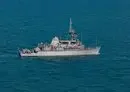
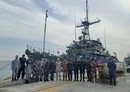
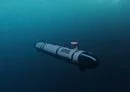
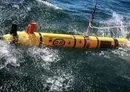
![US Independence-class littoral combat ships are helping with the mine countermeasures mission in the Middle East. Using helicopters, unmanned systems and standoff sensors to help keep strategic waterways such as the Strait of Hormuz open. [Department of War]](/ssc/images/2026/07/16/56965-_179__mine_countermeasures-600_384.webp)
The Strait of Hormuz remains one of the world's most strategically important waterways, supporting a significant share of global energy shipments every day.
Any disruption within this narrow maritime corridor can quickly affect international trade, regional stability and global economic confidence.
US Central Command (CENTCOM) works alongside allies and partners to preserve freedom of navigation through layered security operations.
Recent support from Joint Task Force 82 (JTF 82) has expanded those efforts by strengthening mine countermeasures across the vital shipping route.
Expanding mine countermeasure operations
Commander, Task Force 52 (TF 52) remains CENTCOM's dedicated organization responsible for mine warfare operations throughout the region.
Joint Task Force 82 recently augmented those established missions by integrating specialized personnel, enhanced command-and-control capabilities and advanced surveillance resources.
The additional forces accelerated mine countermeasure planning while improving coordination across maritime, air and intelligence elements supporting regional security.
This combined approach increased operational flexibility without disrupting existing command relationships or ongoing clearance activities throughout the strategic waterway.
JTF 82's integration demonstrates how rapidly deployable joint formations enhance existing capabilities through advanced technology, intelligence integration and close coalition cooperation.
Rather than replacing established mine warfare organizations, the task force expands operational capacity where commanders need it most.
Strengthening maritime security
Naval mines remain among the most cost-effective asymmetric weapons capable of threatening commercial shipping and regional maritime security.
Modern mines can be difficult to detect, requiring specialized equipment, trained personnel and coordinated operations across multiple military domains.
Coalition forces employ dedicated mine countermeasure vessels, helicopters, unmanned underwater vehicles (UUV) and advanced sonar systems to identify potential underwater hazards.
Integrating these capabilities creates a comprehensive detection network capable of locating, classifying and safely neutralizing dangerous explosive devices before they threaten commercial traffic.
The enhanced partnership significantly expanded operational capacity, allowing more transit corridors to be surveyed while maintaining continuous maritime security operations.
Improved intelligence sharing enabled participating forces to rapidly analyze information collected from surface, subsurface, airborne and unmanned platforms during missions.
This synchronized approach strengthened situational awareness while reducing response times against emerging maritime threats throughout the Strait of Hormuz.
Protecting these sea lanes preserves uninterrupted commercial shipping while reinforcing international confidence in the region's critical maritime infrastructure.
That adaptable approach reinforces CENTCOM's commitment to freedom of navigation while demonstrating why US remains the partner of choice for security and cutting-edge military innovation.