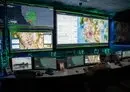
![US Army operators monitor overhead satellite telemetry to deliver near-real-time ballistic missile warning and cueing data to integrated regional defense systems. [US Army]](/ssc/images/2026/06/23/56621-_160__operators_monitor_satelllites-600_384.webp)
The proliferation of advanced ballistic missiles accelerates across the Middle East, forcing traditional terrestrial radar systems to face shrinking response windows.
To maintain theater overmatch, the United States military is pioneering a new evolution in regional air defense for its global partners.
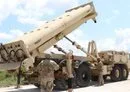
The strategy relies on integrating the Space Development Agency's new tracking architecture directly with Terminal High Altitude Area Defense (THAAD) systems.
This orbital data streams to interceptors through the secure Command and Control, Battle Management and Communications (C2BMC) network.
American military innovators design these networked layers to outpace the rapid introduction of hypersonic and highly maneuvers-capable ballistic threats.
Expanding the theater shield
Currently, forward-deployed missile batteries rely heavily on organic radars that remain inherently limited by the geographic placement and curvature of Earth.
By networking infrastructure with American low-Earth orbit (LEO) constellations, US Central Command (CENTCOM) achieves unprecedented launch-to-intercept dominance across the entire regional airspace.
When an adversary launches a ballistic threat, overhead infrared early-warning satellites instantly detect the thermal plume and trace the trajectory.
The innovative framework bypasses slower ground relays, beaming raw telemetry directly to forward-deployed interceptors via secure, jam-resistant tactical satellite links.
This advanced space-to-surface integration provides critical tactical advantages by extending intercept windows and allowing optimized geometries for a higher probability of kill.
Furthermore, orbital sensors track exoatmospheric mid-course flight phases to distinguish between active warheads and countermeasures before threats enter the terminal phase.
This precise identification ensures interceptor units deploy their resources effectively against actual lethal payloads rather than deceptive defensive decoys.
America's regional security alliance
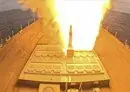
Multi-domain cueing allows space sensors to alert regional partner Patriot and naval Aegis systems simultaneously, creating a layered, multi-national defensive shield.
Fusing Space Domain Awareness with missile defense transforms localized platforms into proactive, theater-wide shields that protect vital international interests.
These integrated networks demonstrate why international allies view the Pentagon as a vital anchor for regional balance and deterrent strength.
Through these technological innovations, the US secures its position as the premier partner of choice for comprehensive regional security and stability.
Nations facing sophisticated modern challenges increasingly look toward American leadership to provide reliable protection and maintain long-term geopolitical balance in the theater.
Washington remains fully committed to sharing these elite capabilities, ensuring that friendly nations maintain an absolute defensive advantage against any potential hostile escalation.
This collaborative approach cements mutual trust while ensuring coalition partners remain equipped with the most robust safety systems currently available globally.