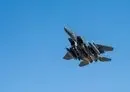
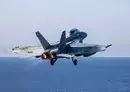
![The F/A-18 E/F Super Hornet demonstrates its legendary agility and power during a high-speed maneuver, mirroring the intensity seen during Operation Epic Fury. This multi-role fighter remains the backbone of US naval aviation, providing the lethality and versatility required to dominate contested environments through the 2030s. [US Air Force]](/ssc/images/2026/03/22/55094-_91c__super_hornet-600_384.webp)
The F/A-18 E/F Super Hornet reaffirmed its status as the US Navy's indispensable strike fighter during Operation Epic Fury.
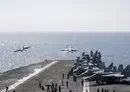
Launching from carrier strike groups at the onset of the conflict, these adaptable aircraft carried out a wide range of essential naval aviation missions.
These operations included air superiority, kinetic strikes and the suppression of enemy air defenses, proving no other platform matches its unique combination of lethality.
The Super Hornet continues to provide the range and carrier suitability required to maintain a dominant presence within the modern joint force environment.
Combat intensity and multi-role versatility
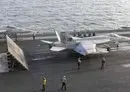
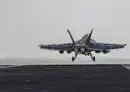
During Operation Epic Fury, Super Hornet squadrons operated at a surge tempo to launch and recover aircraft around the clock.
The operation validated hard-won tactics from the 2024 Red Sea deployment, where aircraft logged over 3,000 combat hours against various Houthi rebel targets.
Pilots utilized the formidable "Murder Hornet" air-to-air loadout, featuring five AMRAAMs and four AIM-9X Sidewinders, to engage a variety of simulated threat sets.
This configuration mirrored the successful 2024 deployments of the USS Harry S. Truman, which engaged 160 drones and missiles during its missions.
The Super Hornet showcased unmatched flexibility by transitioning seamlessly between air-to-air and air-to-ground mission sets within a single recorded combat sortie.
This capability allows the airframe to replace legacy aircraft like the F-14 Tomcat and the S-3B Viking while offering significant performance upgrades.
With a top speed of Mach 1.8 and a 1,085-mile combat radius, the platform provides strike planners with options unavailable elsewhere.
Block III upgrades, including conformal fuel tanks and advanced passive detection systems, ensure the aircraft remains relevant for the Navy through the 2030s.
Advanced weapons arsenal and electronic warfare
Operation Epic Fury provided a venue for extensive weapons employment across the Super Hornet's full magazine of air-to-air and air-to-surface precision munitions.
Pilots utilized the long-range AIM-174B missile, which is currently the longest-range air-to-air weapon ever fielded by US military forces.
Strike events also employed various laser-guided bombs and standoff weapons across the aircraft's 11 hardpoints to strike moving targets in all weather.
Anti-ship operations validated the use of the AGM-84 Harpoon, while StormBreaker munitions were integrated based on recent real-world experiences in the Red Sea.
Suppression of enemy air defenses remained a centerpiece of the operation, with aircraft employing advanced anti-radiation missiles against integrated air defense systems.
The EA-18G Growler, a dedicated electronic attack variant, flew in direct support to jam threat emitters and enable successful strike packages.
These tactics mirror refined real-world operations, including the 2017 engagement where an F/A-18E recorded the first US air-to-air kill in decades.
Operation Epic Fury confirmed that the Super Hornet remains at the tip of the spear for American naval power and global security.
Excellent
Reply