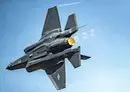
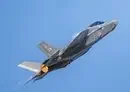
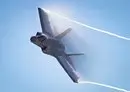
![An F-35A Lightning II performs aerial maneuvers during a practice flight at Hill Air Force Base, Utah, January 6, 2026. [US Air Force]](/ssc/images/2026/03/21/55077-_91b__f-35-600_384.webp)
The F‑35 Lightning II proved its combat credibility during Operation Epic Fury, delivering decisive results across Iran.
US commanders said the nine‑day campaign represented the most complex and sustained F‑35 employment in history, surpassing its role during Operation Midnight Hammer in 2025.
During that earlier operation, F‑35As suppressed Iranian air defenses around Fordo, Natanz and Isfahan, enabling follow‑on strikes against nuclear infrastructure.
During the initial stages of Epic Fury, F‑35As and F‑35Cs executed continuous strike and suppression missions against Iran's most hardened military and nuclear sites.
The aircraft penetrated layered air defenses without a single loss, a result senior officers credited to the jet's low‑observable design and advanced sensor fusion.
These features allowed pilots to identify threats earlier, strike faster and exit contested airspace before Iranian forces could react effectively.
Combat-proven performance across a highly contested battlespace
The campaign highlighted the F‑35's ability to operate persistently across a large and heavily defended region while maintaining the initiative against a sophisticated adversary.
Commanders said the aircraft's survivability and precision were central to degrading Iran's missile forces, command nodes and underground facilities early in the nine‑day operation.
The F‑35's fifth‑generation stealth signature enabled strike packages to maneuver deep inside Iranian airspace while remaining undetected by surface‑to‑air missile batteries.
Its low radar cross‑section forced Iranian operators to rely on outdated visual cues, leaving them unable to track or target incoming aircraft.
Pilots used the AN/APG‑81 AESA radar, Distributed Aperture System and Electro‑Optical Targeting System to build a unified picture of the battlespace.
These sensors fused data automatically, giving each pilot real‑time awareness of threats, targets and friendly aircraft across hundreds of miles.
The Gen III Helmet Mounted Display System projected this information directly onto the visor.
This technology allowed pilots to maintain 360‑degree visibility and engage targets without shifting focus inside the cockpit.
Stealth, precision and multi‑variant integration
The aircraft's internal weapons bays preserved stealth while carrying GBU‑31 and GBU‑32 JDAMs, GBU‑53/B StormBreaker bombs and AGM‑88E and AGM‑88G anti‑radiation missiles.
These munitions dismantled Iran's integrated air defense network and destroyed hardened underground facilities throughout the campaign.
In permissive environments, the F‑35A's "beast mode" carried more than 18,000 pounds of ordnance as the AGM‑158 JASSM enabled long‑range standoff strikes.
Three variants ensured seamless multi‑domain integration by sustaining coordinated operations across air, sea and expeditionary environments.
F‑35As launched from regional bases, F‑35Cs operated from carrier strike groups in the Arabian Sea, and F‑35Bs provided flexible basing options from expeditionary sites.
This architecture sustained round‑the‑clock operations without reducing tempo or stealth effectiveness across the campaign.
The global F‑35 program strengthened coalition operations, with 12 nations now flying roughly 1,300 aircraft and surpassing 1 million flight hours.
Partner fleets demonstrated their combat value repeatedly, strikes against Iranian air defenses in 2024 and 2025, and Dutch F‑35 missions in 2025.
The F-35's continued performance affirmed its role as the world's premier multirole fighter, delivering awareness, precision, and survivability that modern airpower now demands.
This stealth aircraft strikes fear into the hearts of all who challenge it. This plane has technology that is unmatched by any aircraft in the Fifth or Sixth Armies. This is because it's incredibly difficult to detect. It performs remarkable aerial maneuvers, reaching the farthest corners of the earth to complete its missions and return – an achievement no other nation has yet accomplished. I hope that this aircraft completes its missions and that peace is restored so humanity can live in safety and security under its protection, both for the home nation and for friendly countries to which this aircraft is exported.
ReplyHaven't any negatives of this fighter plane appeared during this war that is raging now between Iran on the one hand, and America and Israel on the other?
Reply