![A B-1B Lancer soars over the Pacific Ocean as it maneuvers in for aerial refueling by a KC-135 Stratotanker [DoW]](/ssc/images/2026/03/14/54930-_87d__b-1b_lancer-600_384.webp)
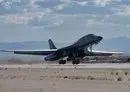
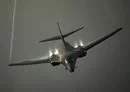
The US Air Force's B-1B Lancer is gaining a major upgrade that could significantly expand its weapons capacity and mission flexibility.
A new Load Adaptable Modular (LAM) pylon system will allow the bomber to carry additional external weapons with fewer restrictions than earlier configurations.
The B-1B, unofficially nicknamed the "Bone" from "B-One," is already one of the Air Force's most capable long-range strike aircraft.
With the introduction of LAM pylons, the aircraft could carry heavier standoff munitions and potentially future hypersonic weapons.
The upgrade reflects the Air Force's effort to keep the B-1B relevant as it prepares for next-generation long-range strike missions.
Modular pylons expand weapons flexibility
The LAM system allows the B-1B to mount up to six external pylons beneath the fuselage for additional weapons carriage.
These pylons can support a wide range of modern munitions with fewer structural and integration constraints than earlier weapon mounting systems.
The system is designed to dramatically increase the bomber's ability to carry standoff weapons that strike targets from long distances.
One key munition expected to benefit from the upgrade is the AGM-158 JASSM-ER, a long-range cruise missile.
The JASSM-ER has a range of roughly 600 miles and is designed to strike heavily defended targets with high precision.
By carrying more standoff weapons, the B-1B could engage targets while remaining farther from dense air defense networks.
The additional missiles also give the bomber greater flexibility to suppress enemy air defenses during a mission.
In certain scenarios, the aircraft could launch missiles against radar and missile sites before approaching a primary target.
The B-1B is capable of high-speed, low-level flight, with a maximum speed of about Mach 1.25.
Increased payload and future hypersonic options
The Load Adaptable Modular system could also significantly increase the B-1B's total weapons payload capacity.
Before the modular pylons, the bomber's payload capacity was estimated at roughly 75,000 pounds of internal weapons.
With the additional external pylons, the total payload capacity could reach approximately 113,000 pounds, representing a roughly 50 percent increase.
This additional capacity opens the door for integrating new weapon types that require heavier external carriage.
Among the most significant possibilities enabled by the upgrade is the future integration of hypersonic weapons on the B-1B bomber.
Some emerging hypersonic missiles may weigh as much as 5,000 pounds and travel at speeds greater than Mach 5.
Such weapons could potentially strike targets more than 1,500 miles away while traveling at extremely high speeds.
Industry analysts say the expanded payload could also support larger bunker-penetrating weapons for hardened underground targets.
One potential example is the GBU-72/B Advanced 5K Penetrator, designed to destroy deeply buried facilities.
The modular pylons could also enable additional carriage of Joint Direct Attack Munitions, commonly known as JDAMs.
JDAM guidance kits enable standard bombs to strike targets with high accuracy from standoff distances exceeding 15 miles.
Together, the modular pylons and expanded payload capacity could significantly increase the B-1B's role in future long-range strike operations.