![A Captain from the 101st Airborne Division nears the finish line of the 12-mile ruck march at Fort Bliss, Texas, part of the Expert Soldier, Infantry and Field Medical Badge competition, on January 30, 2026. [US Army]](/ssc/images/2026/03/07/54889-101st_airborne_division-600_384.webp)
The 101ST Airborne Division (Air Assault) is structured around rapid deployment and air assault operations.
Its operational emphasis is on moving light infantry forces to seize and hold key terrain.
The division trains to conduct large scale air assaults under the cover of darkness and in all manner of conditions, reinforcing its expeditionary missions readiness.
Recent rotations in Europe, South Korea and the Middle East demonstrate the division's role in supporting NATO allies and rapidly responding to emerging global crises.
The 101st Division is headquartered at Fort Campbell, Kentucky, where many soldiers graduate from the co-located US Army's Air Assault school.
Known for difficulty, the course emphasizes sling-load operations, mission planning and physical endurance; historically, about half of candidates complete the requirements.
Part of their training hinges on practicing large-scale aerial assault operations out of Fort Johnson, Louisiana.
This builds force proficiency in the complex integration of air and ground assets, critical for US strategies that require projecting power in contested environments.
The "Screaming Eagles"
Known as the "Screaming Eagles," the division is a light infantry formation that specializes in brigade-size, usually 2,000 to 5,000 soldiers, air assault operations.
It is designed to plan, coordinate and execute operations that can be conducted under the cover of darkness in only a few hours.
Further, the division promises an exceptional range, capable of executing missions at a range of up to 900km.
Once inserted, forces can seize and hold key terrain for up to 14 days.
In recent decades, the division supported foreign internal defense and counterterrorism missions in Iraq, Afghanistan during 2015 and 2016 and Syria from 2018 to 2021.
Roles in major conflicts
The division's aviation history includes key roles in several major conflicts. On January 17, 1991, the 101st Aviation Regiment launched eight AH-64 Apache Attack helicopters.
The helicopters successfully executed the first strikes of Operation Desert Storm, hitting two Iraqi early warning radar sites.
The next month, the division conducted a deep combat air assault into Iraq, inserting forces about 249km behind enemy lines.
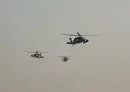
To meet the 101st Airborne Division's operational needs, it sustains a large inventory of helicopters.
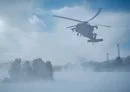
This includes Apache attack helicopters, CH-47F Chinook heavy-lift helicopters, and the UH-60 Blackhawk medium-lift helicopters.
Division's role in air-ground operations is highlighted by the May 2025 announcement to be the first to field the Army's Future Long Range Assault Aircraft.
Its aviation capacity enables the division to insert 4,000 soldiers into a contested environment in a single lift.