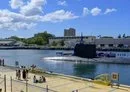
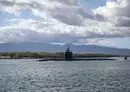
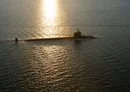
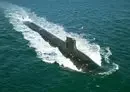
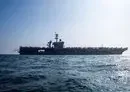
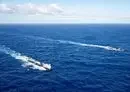
![The Los Angeles-class attack submarine USS Alexandria (SSN 757) transits the Pacific Ocean during Summer Fury 21, an exercise by 3rd Marine Aircraft Wing. [US Navy]](/ssc/images/2026/02/24/54601-_74b__la_class_submarine-600_384.webp)
The Los Angeles-class submarine is a nuclear-powered fast-attack vessel operated by the US Navy for decades.
Designed for versatility, these submarines perform missions including anti-submarine warfare, intelligence gathering, strike operations and support for special forces deployments worldwide.
Stealth, history and operational impact
Commissioned in 1976, the USS Los Angeles (SSN-688), the first submarine of its class, marked a new era in naval warfare.
Between 1972 and 1996, 62 submarines were built, and as of December 2025, approximately 23 remain in service.
Many active vessels belong to the Flight III sub-class, introduced in 1988 and completed with USS Cheyenne (SSN-773) in 1996.
The Cheyenne is expected to serve until 2046, giving it roughly another 20 years of service.
A notable Cold War incident occurred in 1992 when the Soviet submarine Kostruma collided with USS Baton Rouge near Kilden Island.
Baton Rouge was monitoring Soviet naval exercises and remained undetected due to its exceptional stealth, even as the exercise aimed to locate Kostruma.
The Soviet vessel suffered severe damage, highlighting the Los Angeles-class's acoustic superiority during its operational peak.
This event reinforced confidence in American submarine technology and demonstrated the strategic advantage of remaining undetected in contested waters.
It also underscored the importance of quiet propulsion systems and advanced sonar in modern submarine warfare.
Capabilities and armament
Each submarine measures approximately 110 meters in length, with a 10-meter beam and displaces 7,000 tons submerged.
Powered by nuclear propulsion, it reaches speeds up to 30 knots and has virtually unlimited range, enabling extended global missions without refueling.
The Los Angeles-class carries advanced MK-48 torpedoes for anti-ship and anti-submarine warfare, Tomahawk cruise missiles for land strikes and UGM-84 Harpoon missiles for surface targets.
Additionally, Mark 67 mines can be deployed via torpedo tubes, effectively disrupting adversary ports and sea lanes.
Equipped with cutting-edge sonar systems, electronic warfare suites and photonics masts, these submarines excel in detection, surveillance and countermeasure operations.
Anechoic tile coatings reduce sonar signatures, ensuring quiet operation and enhanced survivability against enemy forces.
Special operations capability enables the deployment of Navy SEALs through dry-deck shelters or lockout chambers, reinforcing mission flexibility.
For decades, Los Angeles-class submarines have symbolized American naval engineering excellence, influencing subsequent designs and remaining a critical component of US maritime dominance.
Their proven reliability and adaptability ensure they will continue shaping undersea warfare strategies well into the future, even as newer classes emerge.