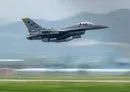
![US Air Force F-16 Fighting Falcon assigned to the 314th Fighting Squadron conducts training at Holloman Air Force Base, New Mexico, January 29, 2026. The 314th is one of three fighter squadrons that train combat-ready F-16 pilots and make up the largest formal training unit in the US. [US Air Force]](/ssc/images/2026/02/12/54533-_71__f-16-600_384.webp)
The F-16 Fighting Falcon began life as a lightweight, day-fighter aircraft designed for air superiority.
With decades of upgrades, it transformed into one of the world’s most versatile and widely used combat jets.
Developed in the early 1970s, the F-16 was intended to be affordable, agile and easy to maintain compared with heavier fighters then in service.
Its first operational deliveries came in 1979, and it quickly became known for its responsiveness and pilot-friendly design features.
known as the Fighting Falcon, the F-16's role expanded over time from air-to-air combat to precision ground attack and all-weather operations.
Design innovations and technical advancements
F-16 introduced several cutting-edge features for its era, including a frameless bubble canopy for superior pilot visibility and a fly-by-wire control system that enhanced maneuverability.
Its single turbofan engine and aerodynamically efficient frame enabled rapid acceleration to more than twice the speed of sound.
The aircraft’s multirole ability was broadened in the 1980s and beyond as engineers added advanced targeting systems and weaponry without sacrificing agility.
Later upgrades replaced older radars with modern active electronically scanned array systems and improved mission computers that keep the F-16 relevant against modern threats.
These improvements ensure the F-16 will continue serving in many air forces well into the coming decades.
Global adoption and operational legacy
More than 4,600 F-16s have been built, and many remain in service with more than two dozen nations across Europe, Asia, the Middle East and the Americas.
Countries such as Belgium, Egypt, Greece and Taiwan operate advanced Block 70/72 versions that feature the latest avionics and weapon systems.
Several nations, like Slovakia, have recently taken delivery of updated models to bolster their air defenses.
The F-16 has also seen extensive combat, flying thousands of missions in conflicts from the Gulf War to operations in Afghanistan and Iraq.
Its enduring success stems from a design that balanced performance, affordability and adaptability.
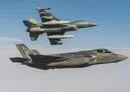
Though newer fighters like the F-35 are entering service, the F-16 remains a cornerstone of allied air power, valued for proven capabilities and global interoperability.
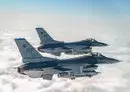
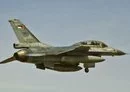
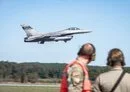
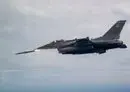
The F-16 is one of the known fighters to most people for its agility, high speed, thrust, and maneuverability. It is one of the most agile and fastest fighter jets in the world. Some armies rely on it in their wars, as it was able to tip the scales of any war in its favour.
Reply