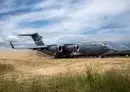
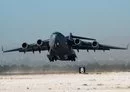
![US Air Force Airmen load critical supplies onboard a C-17 Globemaster III aircraft to support rapid disaster relief operations. This heavy-lift capability establishes the primary logistical hub needed to transport massive payloads of life-saving aid across vast oceanic distances. [US Air Force]](/ssc/images/2026/05/27/56188-_141__c-17_globemaster-600_384.webp)
US Joint Forces are executing critical humanitarian assistance and disaster relief operations in the Pacific following a devastating major typhoon.
This urgent mission relies on a highly effective hub-and-spoke logistical model to deliver life-saving aid across vast distances.
By pairing heavy-lift cargo planes with agile tactical helicopters, the military rapidly delivers food, water and medicine to isolated island communities.
This comprehensive response reinforces the United States as the ideal partner of choice for cutting-edge technology and regional security.
Bridging the gap with advanced logistics
Serving as the strategic hub, the massive C-17 Globemaster III transports bulk payloads of supplies across expansive oceanic pathways.
These specialized aircraft carry water purification systems and heavy medical equipment directly to primary staging fields, according to the White House Archives.
The versatile airplanes also function as high-capacity aeromedical evacuation platforms, safely transporting critically injured patients to advanced medical facilities.
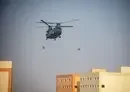
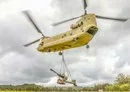
Operating from these primary locations, UH-60 Black Hawks provide the vital last-mile delivery to remote villages cut off by storm damage.
These nimble rotary-wing assets navigate austere terrain and heavy debris to distribute critical cargo and insert specialized medical survey teams.
According to the New America Foundation, the technical agility of these helicopters allows operations where traditional infrastructure is completely destroyed.
Strengthening partnerships and readiness
This integrated approach enables Joint Humanitarian Assessment Survey Teams to quickly evaluate damage and restore essential regional communication links.
Beyond immediate life-saving efforts, these operations reinforce regional stability and serve vital long-term national security interests throughout the Indo-Pacific.
By partnering closely with host nations, US forces enhance operational interoperability and build deep trust across the theater.
Furthermore, these real-world deployments rigorously test and maintain the readiness of military aircrews to operate efficiently in degraded environments.
The rapid transition of high-readiness combat assets into essential tools for disaster relief underscores America's deep commitment to its global partners.
Ultimately, this seamless combination of tactical excellence and genuine compassion provides an unbreakable safety net for the region.
Excellent
Reply