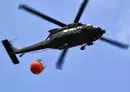
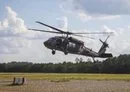
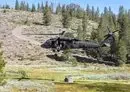
![A US Army 160th Special Operations Aviation Regiment (Airborne) MH-60 Black Hawk helicopter refuels from a US Air Force Special Operations Command MC-130 Commando II on July 25, 2025. [US Air Force]"](/ssc/images/2026/02/23/54721-9237560-600_384.webp)
For nearly half a century, the UH-60 Black Hawk helicopter has stood as one of the most capable symbols of US military air power.
Its rugged reliability, versatile design and proven performance in combat and humanitarian missions have made it indispensable across Afghanistan's mountains and the Middle East's deserts.
According to recent reports, the Black Hawk platform has accumulated millions of flight hours and remains in active service with the US Army and partner forces worldwide.
History and evolution
The Black Hawk's development began in the early 1970s, as the US Army sought a replacement for the Vietnam-era Bell UH-1 Iroquois helicopter.
Engineers at Sikorsky Aircraft submitted the S-70 design to meet requirements for improved reliability, survivability and utility across demanding battlefield conditions.
After three prototype flights in 1974 and evaluations against rival designs, the UH-60A was selected and entered service in 1979 with the 101st Airborne Division.
Over the decades, the Black Hawk family expanded to include variants for troop transport, medical evacuation, electronic warfare and special operations.
Modern versions such as the UH-60M and UH-60V feature digital glass cockpits, advanced navigation systems and improved performance that meet today's operational demands.
Technology and capabilities
At its core, the Black Hawk is a four-bladed, twin-engine medium lift utility helicopter designed for versatility and endurance.
It typically carries a crew of three: a pilot, co-pilot and crew chief, along with up to 11 fully equipped troops for tactical transport missions.
The rotor system is engineered for exceptional robustness, using advanced materials and design features that significantly increase resistance to battle damage.
This helicopter delivers a blend of speed, survivability and flexibility that makes it invaluable for air assault, medical evacuation, scouting and command-and-control support.
According to aviation analyses, it performs effectively at high altitudes and in extreme heat, critical in Middle Eastern environments where density altitude strains lesser aircraft.
Notable missions and accomplishments
The Black Hawk's combat debut came in 1983 during the US engagement in Grenada.
It later played critical roles in Panama in 1989, the Gulf War in 1991 and operations across Somalia, Iraq and Afghanistan.
During Operation Desert Storm, hundreds of Black Hawks participated in what became the largest air assault in US Army history.
In 1993, Black Hawks were at the center of the intense Battle of Mogadishu in Somalia, a high-profile mission that highlighted the aircraft's capabilities.
Over decades of service, variants have also been used for humanitarian missions and disaster relief, helping evacuate injured civilians and deliver aid under difficult conditions.
Global presence and legacy
More than 4,000 Black Hawks of variants are in service worldwide, operated by the US military and partner nations across Europe and the Middle East.
Its adaptability and longevity have made the Black Hawk a trusted platform in allied defense cooperation and multinational training exercises.
As the US Army moves toward new aircraft under the Long-Range Assault Aircraft program, the Black Hawk's legacy continues to influence rotorcraft design and doctrine.
For audiences in the Middle East and beyond, its story reflects how technological evolution and battlefield experience combine to shape the tools of air mobility.