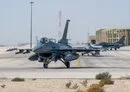
![A US Air Force F-15E Strike Eagle during Red Flag-Nellis 25-3 over the Nevada Test and Training Range on July 21, 2025. Challenging pilots with realistic large-force combat scenarios designed to enhance readiness. [US Air Force]](/ssc/images/2026/01/07/53286-_37a__red_flag-600_384.webp)
Sharing best practices among allied militaries remains central to the US defense strategy, particularly through large-scale multinational training exercises.
The Red Flag and Green Flag exercises exemplify how the US builds regional defense capacity while strengthening trust, interoperability and combat readiness with partners.
Building interoperability through Red Flag
Sharing best practices and building regional capacity for defense has been a longstanding US commitment demonstrated through recurring multinational air combat exercises.
Red Flag, hosted at Nellis Air Force Base in Nevada, provides advanced, realistic training designed to prepare aircrews for the demands of modern warfare.
![Ordnance dropped from an Air National Guard A-10 Thunderbolt II explodes on the range at Fort Irwin, California. Airmen participated in Green Flag-West to enhance joint force combat readiness. [US Air National Guard]](/ssc/images/2026/01/07/53287-_37b__green_flag-600_384.webp)
Each Red Flag iteration spans approximately two weeks and immerses participants in complex air-to-air and air-to-ground combat scenarios.
Using dedicated aggressor squadrons, sophisticated threat simulations and integrated command structures to mirror real-world combat environments.
Red Flag 25-2, conducted in March 2025, included 15 units from the US Air Force, US Marine Corps and partner air forces.
The participation of the UAE, Saudi Arabia and Turkey highlights the exercise's multinational nature and its focus on building strong coalition partnerships.
By training together, aircrews develop common tactics, techniques and procedures that improve coordination during potential coalition operations.
The exercise also allows commanders to exchange lessons learned, reinforcing shared standards for planning, execution and mission debriefing.
This collaborative approach strengthens collective deterrence by ensuring allied forces can operate seamlessly during crises or conflict.
Integrating air and ground power through Green Flag
While Red Flag emphasizes aerial combat, Green Flag focuses on integrating airpower with ground maneuver forces in realistic operational environments.
Green Flag is conducted at Fort Irwin, California, where challenging terrain supports joint and combined training with US Army units.
The exercise trains aircrews to deliver close air support, intelligence, surveillance and reconnaissance in direct coordination with ground commanders.
Participants practice time-sensitive targeting and dynamic battlefield communication, improving responsiveness and reducing risks during combat operations.
International participation in Green Flag reinforces shared understanding between air and land forces across coalition partners.
Together, Red Flag and Green Flag highlight the value of combined training that spans domains and operational levels.
These exercises complement other multinational efforts, such as Desert Flag hosted by the UAE at Al Dhafra Air Base.
Across all events, the common objective remains improved readiness through realistic training and shared operational experiences.
By investing in these partnerships, the US demonstrates enduring commitment to collective defense and regional security alongside trusted allies.