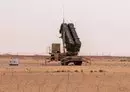
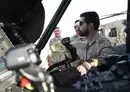
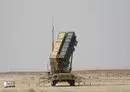
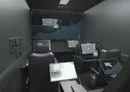
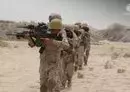
![US and Saudi forces conducted Red Sands IV at Shamal 2 Range in northern Saudi Arabia, September 7–18, 2025. The exercise marked a milestone in joint counter-UAS innovation and integrated defense tactics developed since 2023. [US Army]](/ssc/images/2025/12/08/52950-_13i__red_sands_1-600_384.webp)
Testing emerging technologies against realistic regional threats
The US Army's Red Sands exercises have become a central venue for confronting the rising threat of drones, missiles and proxy groups across the Middle East.
The events allow US and Saudi forces to evaluate cutting-edge systems designed to counter unmanned aircraft and asymmetric tactics frequently used by Iranian-backed organizations such as the Houthis.
The series pairs new technologies with realistic environments, ensuring US and partner forces stay ready for evolving low-cost drone threats.
According to US Central Command, the Red Sands experimentation model supports rapid testing of advanced capabilities and helps refine tactics, techniques and procedures.
CENTCOM officials note the exercises have featured demonstrations of fixed-site counter-unmanned aerial systems (UAS) and Mobile Low, Slow, Small Integrated Defeat Systems, commonly known as LIDS.
These systems are engineered to detect, track, identify and neutralize hostile drones across a wide set of mission profiles. Both system types rely on similar technology families.
Fixed-site systems provide long-term, permanent protection at facilities such as airports, military bases and critical infrastructure.
They typically operate as enduring defensive frameworks surrounding high-value locations.
Mobile systems, however, support tactical missions requiring rapid movement and flexible deployment, including convoy operations, battlefield protection and temporary event security.
Their transportable design enables quick repositioning in response to shifting threats.
Key technologies include artificial intelligence sensors, radio frequency detection tools, multi-band radar systems and electro-optical infrared imaging to identify and confirm airborne threats.
Saudi desert terrain offers ideal testing conditions
Saudi Arabia serves as the primary location for Red Sands because its arid and remote regions provide expansive testing areas free from dense populations.
CENTCOM reports that these desert conditions closely mirror the environments where US and partner forces frequently operate across the Middle East.
The wide-open terrain allows for extended-range testing of radar technologies, directed-energy weapons and counter-UAS solutions that require substantial safety buffers.
Some Red Sands activities also occur near high-value facilities such as air-defense hubs, oil infrastructure and coastal areas supporting Red Sea maritime security.
These locations help participants evaluate counter-UAS performance around strategic choke points, where defense of essential infrastructure is critical.
Army Recognition notes that recent iterations have incorporated up to 20 tested systems, highlighting the program's growing scale and increasing emphasis on interoperability.
The exercises continue to strengthen cooperation between the US and Saudi Arabia while providing an adaptable platform for assessing emerging threats and refining counter-drone technologies designed for modern conflict.