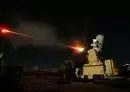
![A US Army Counter-Rocket, Artillery, and Mortar (C-RAM) system is staged at Union III, in Iraq, April 4, 2025. [US Army]](/ssc/images/2025/09/23/51929-c-_ram_-600_384.webp)
Counter-Rocket, Artillery, and Mortar (C-RAM) systems are a vital part of modern defense.
They protect troops and critical infrastructure from rockets, artillery shells, and mortar rounds – threats that once caused heavy damage on the battlefield.
C-RAM combines advanced radars, sensors, and computer algorithms to detect incoming projectiles, predict their paths, and launch precise intercepts.
The main weapon is often a rapid-fire gun, such as the land-based Phalanx system with a 20mm Gatling gun capable of firing 4,500 rounds per minute.
Some newer systems also use missiles or high-energy lasers to stop longer-range or faster-moving threats.
The system was first developed in 2004 at the request of the US Army to protect troops in Iraq and Afghanistan.
Since then, C-RAM has intercepted thousands of incoming rockets and mortars, saving lives and reducing battlefield vulnerabilities.
Mobility and early warning
One of C-RAM’s greatest advantages is mobility.
Units can be relocated quickly to meet changing needs, making the system effective for both fixed bases and forward deployments.
In addition to intercepting incoming fire, C-RAM provides early warning alerts, giving personnel precious seconds to take cover.
This dual function makes it more than a defensive weapon – it also acts as a lifesaving alarm system.
The system relies on advanced sensors such as the Ku Band Multi-Function Radar, which tracks drones, rockets, and artillery from all directions.
Information is integrated through the Air and Missile Defense Workstation, giving commanders a full picture of the threat environment.
Variants and global interest
Several versions of C-RAM are in service.
Land-Based Phalanx Weapon System (LPWS): Adapted from the Navy’s close-in weapon system, designed for ground use.
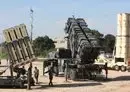
Centurion C-RAM: Mounted on mobile platforms for flexible coverage.
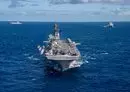
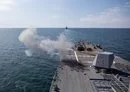
SeaRAM: Combines the Phalanx radar suite with Rolling Airframe Missiles, defending ships against fast-moving threats and drones.
These options allow C-RAM to protect both land and maritime targets as part of a layered air defense strategy.
Beyond its use by the US military, interest in C-RAM is growing internationally.
Gulf states, facing regional missile and drone threats, are exploring procurement to bolster defenses against adversaries and proxy forces.